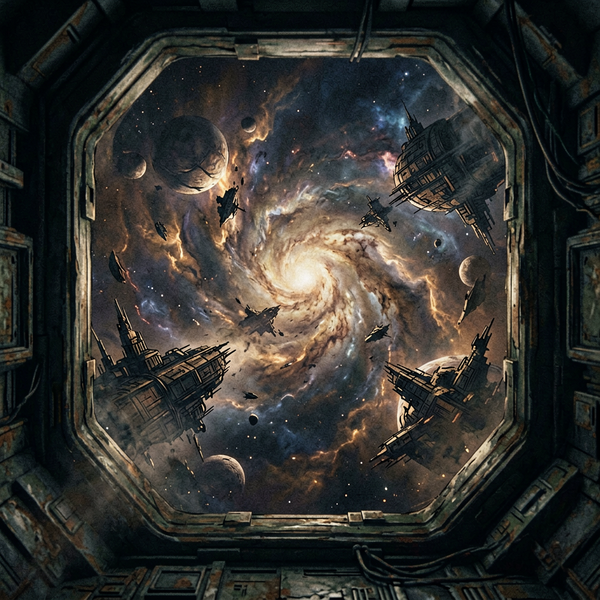
Frozen Light Singularity Mechanics: The 1588 Device That Broke Time
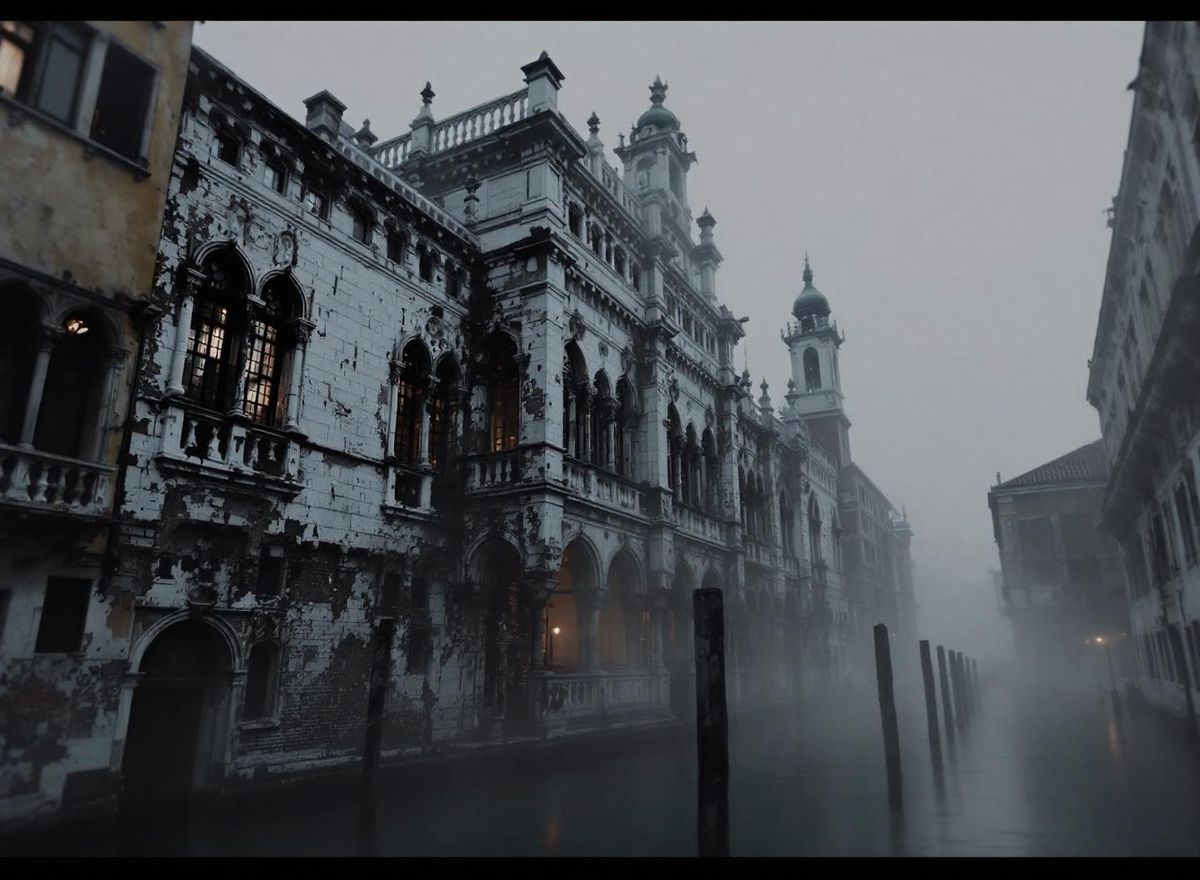
The 1588 Device That Broke Time
Venice, While the Doge counted ducats and merchants measured silk, Alvise Eschendorf was committing heresy against causality itself. In a soundproofed workshop on the Giudecca Canal, he assembled the Frozen Light Singularity — the first and most dangerous engine of temporal capitalism ever built. This crystalline-brass apparatus didn't just break time; it turned it into currency. Every time jump in The Stolen Stream traces back to this single device, and the The Fracture Zone is its unhealed wound.
The Core Principle: Photonic Time Storage
The Singularity operates on a truth most physicists still refuse to accept: light is time. Not as metaphor — as physical fact. In our universe, photons carry a chronal signature embedded in their quantum state, a timestamp linking each particle to its exact moment of emission. Eschendorf discovered that by threading light through a lattice of Venetian crystal — the crystals grown with mercury ore smuggled from Idrija mines — he could decelerate photons to rest.
Normal physics says light moves at 299,792,458 m/s because photons have no mass. Eschendorf's lattice created a local violation, a pocket where massless particles could be trapped in standing waves, frozen mid-flight, and stored indefinitely. Each captured photon preserves its original chronal signature. A beam captured in 1588 still remembers being 1588 light. Release those photons, re-accelerate them, and the observer experiences the moment of original emission — not the moment of release.
The Singularity doesn't store time abstractly. It archives photons tagged to specific moments. That distinction matters when you understand what Eschendorf did next.
The Brass and Crystal Mechanism
The device is a sphere of engraved brass, 1.5 meters in diameter, covered in astrolabe markings and Eschendorf family sigils. Inside:
- The Primary Lattice: A geodesic mesh of Venetian crystal rods cut to Fibonacci-aligned angles. This creates a cascading refractive trap that slows light until it approaches zero velocity.
- The Focus Lens: A crown of polished Murano glass at the top that concentrates ambient light into the lattice, beginning the capture cycle.
- The Brass Resonator Ring: Vibrates at a harmonic tied to Earth's Schumann resonance, stabilizing captured photons against quantum decoherence.
- The Anchor Mechanism: A pendulum system at the base, calibrated to local gravity, locking the Singularity's reference frame to Earth's rotation so stored time doesn't drift from experienced time.
The entire assembly is hand-cranked. One full rotation captures roughly 24 hours of light. Two operators worked shifts to keep it running. But storage was only half the invention.
Frame Dragging and the Time Jump
Eschendorf's breakthrough came when he realized the stored photons could be used to perform a frame drag — pulling the operator's temporal reference frame into alignment with the archived photons' chronal signature. The result: the operator experiences the stored moment as present, while the outside world continues at normal speed. Duration depends on how many captured photons are released. A full crank's worth gives 24 hours of subjective time. More cranks, longer jumps.
The cost? Every jump leaves a scar in spacetime. The The Fracture Zone around Venice is the accumulated residue of centuries of frame drags performed using the original Singularity. Time doesn't heal there — it bleeds. Jump too close to a scar, and you risk chronal bleed — the stored photons from different eras mixing, causing temporal superposition. Witnesses report seeing 16th-century gondoliers in the same canal as 21st-century tourists, both equally real, equally wrong.
The original device is lost. Some say it was dismantled by Eschendorf himself after he saw what it created. Others claim it still operates, hidden somewhere in the The Fracture Zone, cranked by hands that stopped aging in 1588.
More from the The Stolen Stream universe: The Stolen Stream Universe | The Stolen Stream Book 1 | The Stolen Stream Book 2
Related: The Fracture Zone Bazaar Guide · 10 1 Temporal Toll Biological Cost Function · Complete Guide Stolen Stream Universe