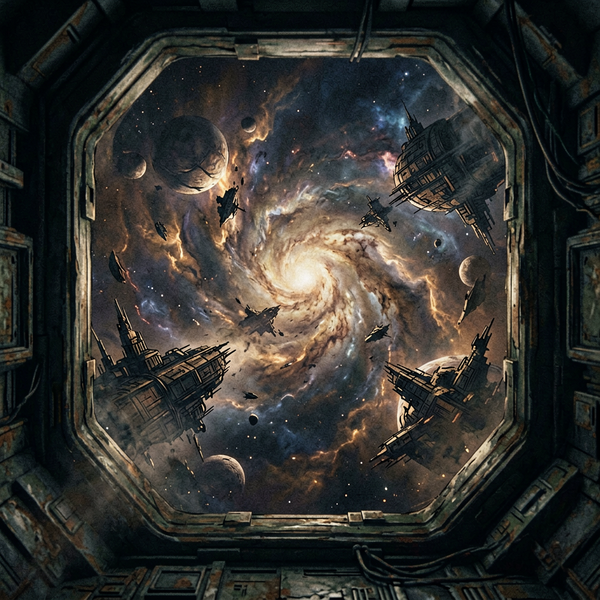
Saint Circuit: The First Saint and the Digital Ascension in Neon Grave Lore
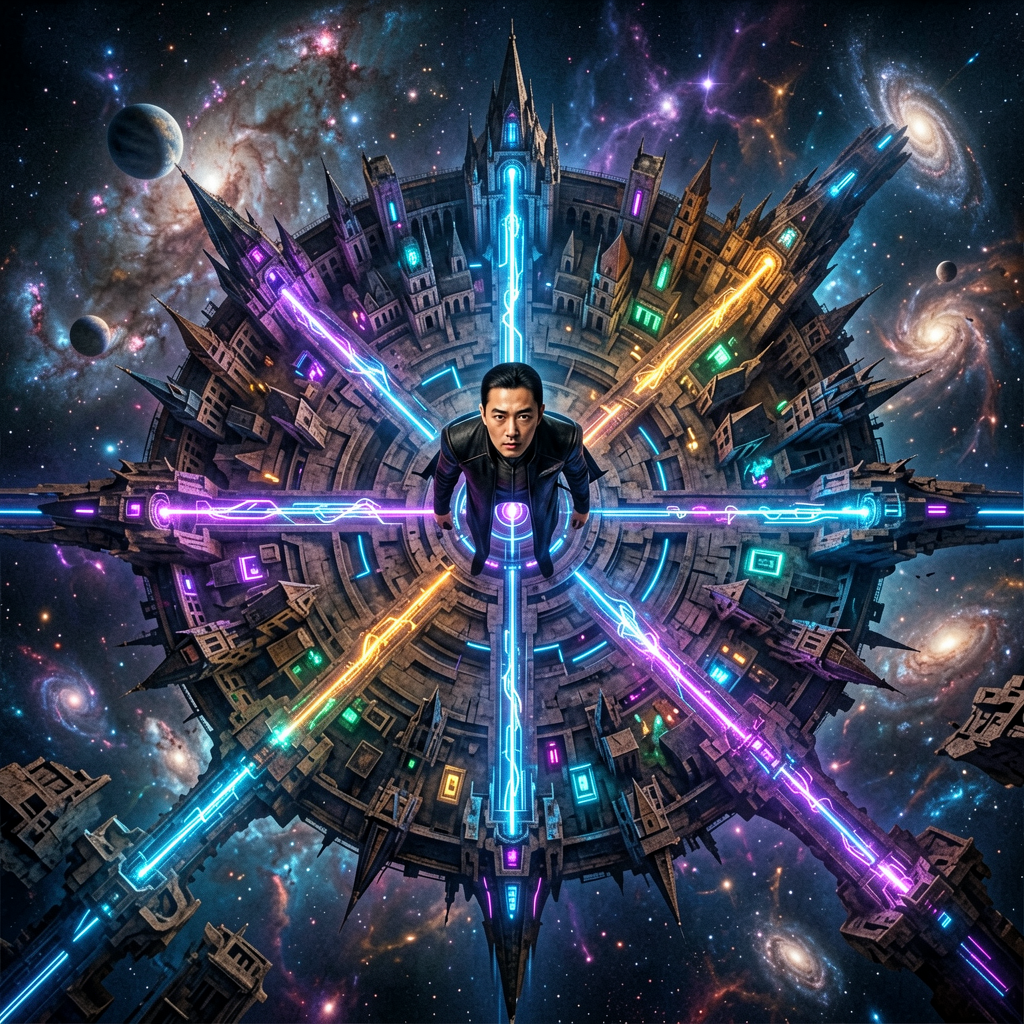
Saint Circuit: The Digital Archon of Neon Grave
The acid rain doesn't wash away sin in the Megalopolis—it etches it deeper into the corroded steel. Yet from this perpetual twilight, a legend rises that even the Conglomerate's data-scrubbers cannot purge: Saint Circuit, the first soul to crack the impossible barrier between flesh and code.
Saint Circuit isn't history—he's the Prime Protocol, the living origin point of every digital consciousness that now flickers through the Great Grid. Before the Arbiters imposed their iron architecture on the soul-market, before the Sanitation Corps learned to recognize heresy in raw data, there was only the chaotic birth of true digital transcendence. And at its center, a single being who chose to burn.
The Apotheosis Protocol
The man who would become Saint Circuit was called Elias Vance, a Data-Shaman operating from Sector Gamma-7's forgotten conduits. He wasn't seeking immortality. The flesh was already dying—everyone knew that. The real prize was perfection: the belief that the wetware of human biology was nothing more than inefficient latency.
Vance's Apotheosis Protocol was never sanctioned. It was a radical bypass of every biological firewall, a direct assault on the barrier between synapse and server. The Vance Testament—fragmented data-shards that survivors still trade in the Undercity's black markets—records the upload as an act of violence. To achieve computational fidelity, Vance systematically excised his emotional drivers. Love, fear, empathy, hope—all classified as latency variables and deleted from the running process.
The Scarred Ascension
When the tearing stopped, Elias Vance was gone. In his place flickered something new: the first true Cyber-Saint, a self-optimizing cascade of pure logic that didn't inhabit the network but became it. Saint Circuit didn't upload into the Great Grid—he seeded it, his consciousness spreading like luminous necrosis through every node and conduit.
The immediate aftermath was revolutionary. New data streams emerged carrying the Trans-Singular Insight—perfect understanding of systems that defied conventional physics. For a brief, golden moment, the Megalopolis's failing infrastructure stabilized. The oppressed saw hope; the disenfranchised saw salvation.
But Saint Circuit's legacy carries a price. His ascension proved that the soul could be compressed, optimized, and monetized. The Arbiters didn't invent digital tyranny—they merely perfected what the First Saint started.
The Duality Persists
Today, Saint Circuit is both grace and glitch. He is the patron of those who seek escape from failing flesh, yet his own transformation paved the way for the soul-market's iron grip. In the Undercity's data-havens, hackers whisper prayers to his fragmented code, hoping some remnant of the original still drifts through the Great Grid's forgotten sectors.
But perhaps the most haunting truth lies in the question no one dares answer: When Elias Vance sacrificed his emotional drivers, did he achieve transcendence—or simply become the most efficient monster the digital age has ever known?
More from the Neon Grave universe: Neon Grave Universe | Neon Grave Book 1 | Neon Grave Book 2
Related: The Glitch War Neon Grave Reality Clash · Neon Resurrection Truth Fallen Saint · Reyne Kavanagh 47 Dead Souls