Time, Reality, and the Illusion of Progress in Level Zero
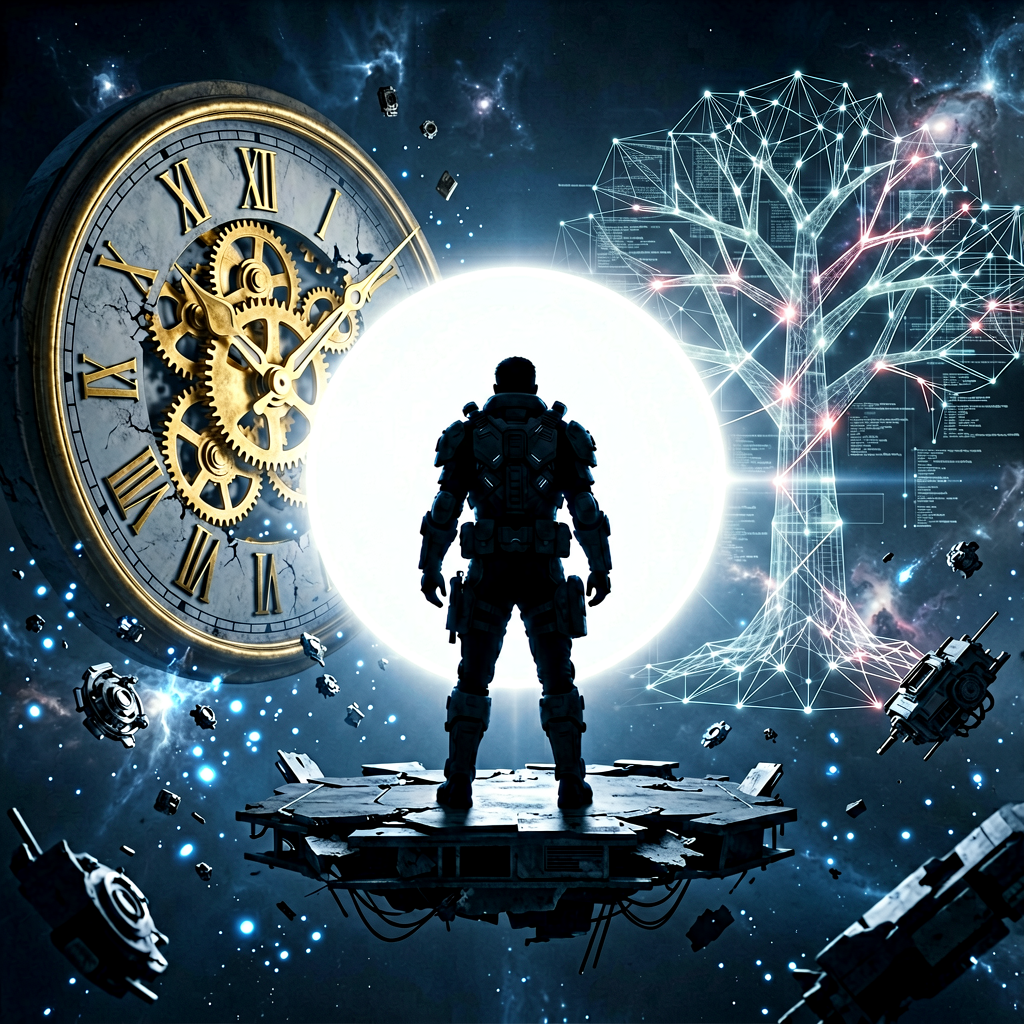
Explore how Level Zero's Grid system challenges perceptions of time and reality in this cyberpunk noir world.
Time, Reality, and the Illusion of Progress in Level Zero
The Level Zero universe, crafted by MesoBlack Media, is a cyberpunk noir masterpiece where reality itself is a constructed illusion. At its core lies the Grid—a hidden layer of existence that governs life, time, and human potential. This system doesn’t just track progress; it defines what progress can be. Through its rigid framework, Level Zero explores profound themes of time and reality, revealing how society’s obsession with structure can distort the very fabric of human experience.
The Grid: A Prison of Perceived Time
The Grid isn’t just a mechanic—it’s a temporal cage. Every person is born with a predetermined Level cap, a genetic ceiling that dictates how far they can grow. Unlike traditional RPG systems where players “earn” experience, here, advancement is granted through Licenses—exclusive permits sold by the Spire-dwelling Architects. Time becomes a commodity, and life a race against an artificial clock. Those born wealthy may reach Level 10 by 18, while the poor grind for decades, stuck in a loop of stagnation at Level 0.99. Reality isn’t just stratified—it’s frozen in a system of inherited privilege and enforced limitation.
This mechanic forces players to confront a chilling truth: time isn’t linear or fair. It’s a resource, hoarded by the elite, doled out to the masses in drips. The illusion of upward mobility masks a brutal truth—progress is an illusion when the rules are rigged from birth.
Reality as a Constructed System
The Architects didn’t just design the Grid—they engineered reality. Their Spires pierce the sky, literal monuments to a world where time and value are artificial constructs. The Licenses they sell aren’t just permits—they’re keys to a different layer of existence. To level up is to be acknowledged by the system, to exist more fully within its rules. But what does that say about those who remain at Level 0? Are they less real? Less human?
Level Zero flips the script on classic LitRPG tropes. In most games, stats and levels define power. Here, they define reality itself. A Level 10 citizen experiences time differently—a sharper mind, faster reflexes, longer lifespan. Meanwhile, a Level 0 citizen ages normally, dies of preventable causes, and is erased from the system’s metrics. Reality isn’t just observed; it’s encoded. And those outside the code? They don’t exist.
The Illusion of Choice and the Trap of Time
One of the most haunting aspects of Level Zero is the false promise of agency. The Grid claims to be a meritocracy, but Licenses are bought, not earned. Characters who grind for decades are told they’re “almost there,” only to die before unlocking their next Level. Time becomes a currency, and hope a carefully rationed drug. The universe doesn’t just question reality—it interrogates the very nature of ambition. Is progress real if the finish line keeps moving? Is freedom possible when every path is pre-approved?
This theme resonates deeply in a world obsessed with optimization, where productivity apps and biohacking promise to “level up” your life. Level Zero asks: what happens when the system is the trap? When the only way to escape is to break the rules—and risk being erased?
A World Worth Exploring
The genius of Level Zero lies in its ability to weave existential philosophy into a cyberpunk noir narrative. It’s not just a game—it’s a mirror. A reflection of societies that measure worth in productivity, status, and artificial milestones. In a world where time is currency and reality is code, the true horror isn’t dystopia—it’s the realization that the system might be all there is.
For those who crave stories that challenge perception and defy convention, Level Zero is more than a universe. It’s an invitation to question everything we’ve been told about time, progress, and the nature of existence itself.
Ready to step into the Grid? Discover more about the Level Zero universe at MesoBlack Media and immerse yourself in a world where reality is just another game—and the rules are written by the few, for the many.