Tower of Names litRPG books with class system explained
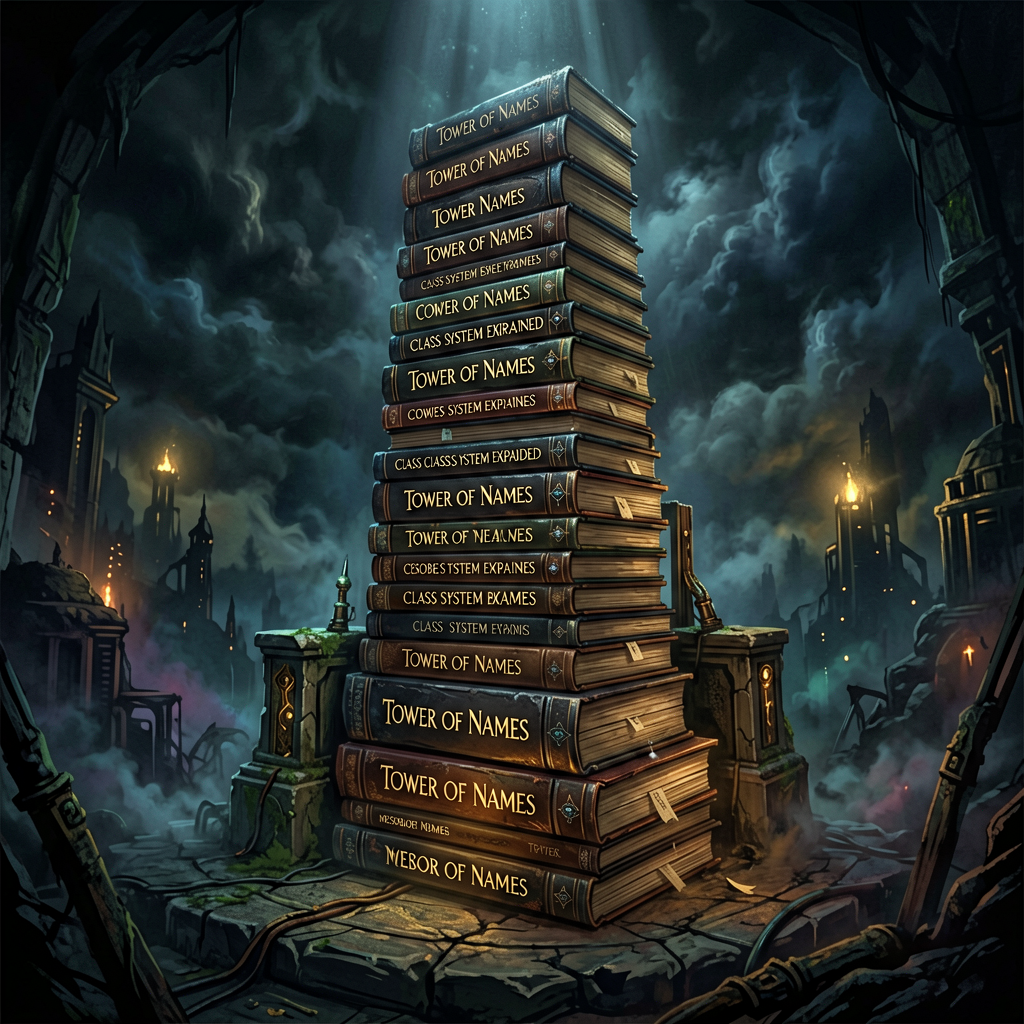
Tower of Names litRPG books with class system explained
In the SFF world right now, lawsuits over AI training data and copyright are reshaping how we think about original worldbuilding — and that’s why understanding a system like the Tower of Names class framework matters more than ever. When a universe builds its mechanics from the ground up, it protects both the author’s work and the reader’s immersion. The Tower of Names litRPG books deliver exactly that: a class system that feels handcrafted, not copy-pasted.
If you’ve ever wondered how classes work inside the Tower — not just as job titles but as mechanical, narrative drivers — this post breaks it down.
What is the class system in Tower of Names litRPG books? The class system in Tower of Names is the core progression mechanic that determines how a climber advances through the Tower’s floors. Unlike generic litRPG systems where classes are cosmetic labels, Tower of Names ties every class to the Echo — the residual memory of the Tower’s previous climbers. When a character selects a class, they aren’t just picking skills; they’re inheriting fragments of past lives, combat styles, and even personality traits.
Classes are divided into three primary Tiers: Initiate, Adept, and Master. Each Tier unlocks new Glyph Slots — the physical and magical anchors that allow a climber to activate abilities. A climber’s class also dictates their Resonance Affinity, which governs how they interact with the Tower’s environmental hazards and puzzles.
How does class selection and advancement work? Climbers do not choose their class at the start. Instead, the Tower assigns a Provisional Class after the first floor’s trial. This class is based on the climber’s innate Resonance Signature — a combination of their physical attributes, mental fortitude, and the Echoes they attract during the trial.
After the third floor, climbers can Re-forge their class at a Threshold Node. This is the only opportunity to change classes, and it costs Memory Shards — fragments of Echo data harvested from defeated enemies or solved Tower puzzles. Re-forging allows a climber to specialize into one of three Branch Paths:
The Warden Path – Tank and support classes that manipulate the Tower’s physical structure (e.g., Stone Echo, Barrier Weaver). The Seeker Path – Scout and damage-dealer classes that exploit the Tower’s memory loops (e.g., Echo Blade, Flux Sniper). The Anchor Path – Caster and controller classes that bind Echoes to their will (e.g., Glyph Binder, Resonance Mage). Advancement from Initiate to Adept requires clearing the sixth floor. Master Tier unlocks only after surviving the Tenth Floor Crucible, a solo trial that forces the climber to face their own Echo.
Why the class system matters in the Tower of Names universe The class system isn’t just a gameplay wrapper — it’s the narrative engine. Every class choice creates friction with the Tower’s Corruption mechanic. If a climber’s class Resonance clashes with the floor’s dominant Echo, they suffer Resonance Decay, reducing their max Glyph Slots. This forces climbers to adapt their playstyle floor by floor, or risk becoming Hollow — a climber whose Echo has been overwritten by the Tower.
This design matters because it prevents static builds. A climber who rushes to Master Tier without diversifying their Glyph loadout will hit a wall on the seventh floor, where the Tower actively rewrites memory patterns. The class system rewards flexibility and punishes greed — a rare trait in litRPG systems.
For a deeper dive into how classes interact with the Tower’s lore, including the Echo Warden origin story, check out the <a href="https://www.mesoblackmedia.com/tower-of-names-complete-guide">Tower of Names lore guide</a>.
How the class system compares to other litRPG systems Most litRPG books treat classes as skill trees with linear upgrades. Tower of Names does something different: it uses Class Echoes as both a resource and a danger. When a climber uses a class ability, they generate Echo Residue. Too much Residue attracts Echo Shades — hostile memory constructs that mimic the class’s previous owner.
This creates a risk-reward loop that other systems lack. A Seeker Path climber might overuse Echo Blade to clear a room, only to summon the shade of the blade’s original wielder mid-fight. That shade knows the climber’s every move because it remembers using the same class.
The system also features Class Locking — if a climber dies while their class is active, the class becomes permanently bound to that floor. Future climbers can find and equip it, but only after defeating the Echo Shade of the previous owner. This turns every class into a piece of Tower history.
FAQ FAQ: Can I change my class after Re-forging? No. Once you Re-forge at a Threshold Node, your class is locked until you either clear the Tenth Floor Crucible (which grants a single Echo Reset) or die and respawn as a Hollow. Hollows lose all class benefits but gain the ability to temporarily borrow any class from a fallen climber on the same floor.
FAQ: What happens if my class Resonance clashes with a floor’s Echo? You suffer Resonance Decay. Your Glyph Slots shrink by one per floor level, and your abilities cost 20% more Memory Shards to activate. You can mitigate this by equipping Null Glyphs, which suppress your class’s Echo signature for a short time. Null Glyphs are rare and usually found in Hidden Vaults on floors 4, 7, and 9.
FAQ: Are there hidden or secret classes in Tower of Names? Yes. Three Legendary Classes exist, but they are not listed in any Threshold Node menu. To unlock one, a climber must solve a Memory Puzzle that spans at least three floors. The most famous is the Silent Echo class, which allows the climber to phase through walls and read the Tower’s raw memory data. Only two climbers have ever unlocked it in published canon.
Explore the full canon: Tower Of Names — Complete Lore Guide
Tower Of Names is part of the MesoBlack Media hard sci-fi universe — six interconnected franchises spanning cyberpunk cities, frozen-light singularities, and a 437-year family crime spree. The lore rewards discovery: each franchise reveals more about the others, and the deeper you read, the more the connections surface. Central ideas such as The Tower, The Wall of Names, The Inscription anchor the larger canon and echo across every release. This article is one entry point into that world. Whether you came for the tech, the characters, or the mysteries, the lore guide above will take you further. The universe expands weekly, and the story is far from over. Readers who explore the canon discover how each thread connects to the others, and why the franchise's conflicts matter beyond a single book. New readers should start with the lore guide; longtime fans will find fresh threads in every release.