Why Temporal Economics Is Next Hard Sci Fi Frontier

The Frozen Light Singularity
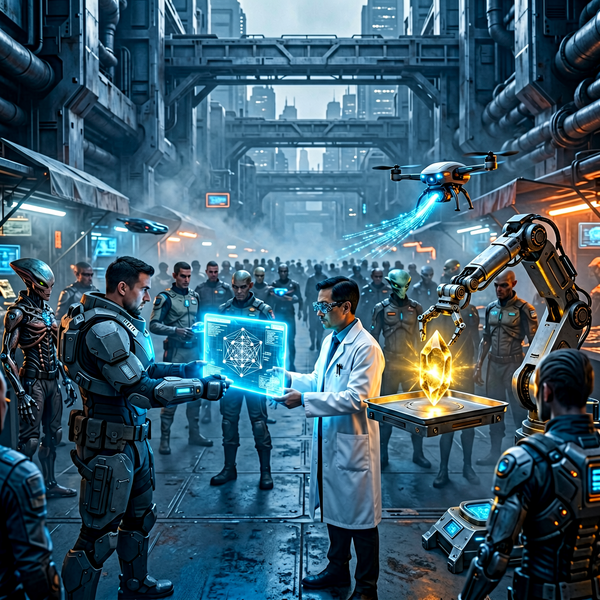
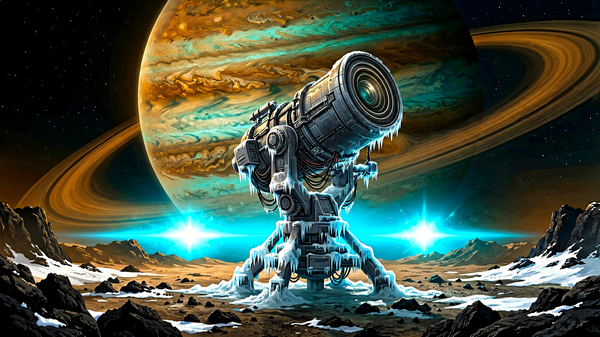
Time is the final currency, and humanity has learned to trade it. In the universe of The Stolen Stream, temporal economics isn't a metaphor—it's a brutal, regulated system built on the physics of the Frozen Light Singularity. This device doesn't create time—nothing can—but redirects it through Temporal Toll Physics, allowing years to be extracted, stored, and transferred.
The result is a society stratified not by wealth, but by lifespan: the elite extend their existence for centuries, while the indebted burn through their allotted decades in servitude. Every second of borrowed time deepens the chasm between those who own the clock and those who merely tick inside it.
The Mechanics of Borrowed Time
The system operates on strict physical laws. Time cannot be created or destroyed, only reallocated. Through Chronometric Extraction, individuals can willingly—or forcibly—surrender years of their life, which are then banked within the Singularity's core. These reserves form the backbone of a new economic order, where time credits are the ultimate measure of value.
Debt isn't paid in currency—it's paid in seconds, minutes, and years. Those who fall behind sacrifice their future to power the present of the ruling class. This isn't mere speculation; it's a logical extension of real-world inequities—healthcare gaps, wage theft, generational privilege—pushed to their most extreme conclusion. The mechanics echo the core conflicts explored in The Stolen Stream Book 1, where the cost of survival is measured in stolen decades.
A Warning in Plain Sight
As advancements in longevity science and AI accelerate, the fiction of The Stolen Stream feels increasingly prophetic. The series doesn't just imagine a future—it mirrors the trajectory of our own societal divides, asking what happens when life expectancy becomes just another asset class. The deeper implications of Temporal Toll Physics ripple outward into The Stolen Stream Universe, revealing how entire civilizations rise and fall on the manipulation of time itself.
This is hard sci-fi at its most incisive: grounded in theoretical physics, sharpened by social critique. There are no time machines here—only the cold, calculating machinery of temporal capitalism. The frozen light of the Singularity doesn't grant second chances. It merely tallies what you owe.
More from the The Stolen Stream universe: The Stolen Stream Universe | The Stolen Stream Book 1 | The Stolen Stream Book 2
Related: 10 1 Toll Every Time Travel Books Rules Compared · Temporal Economics Stolen Stream · Tss Lore 2