The Blur — Fragment

The Blur
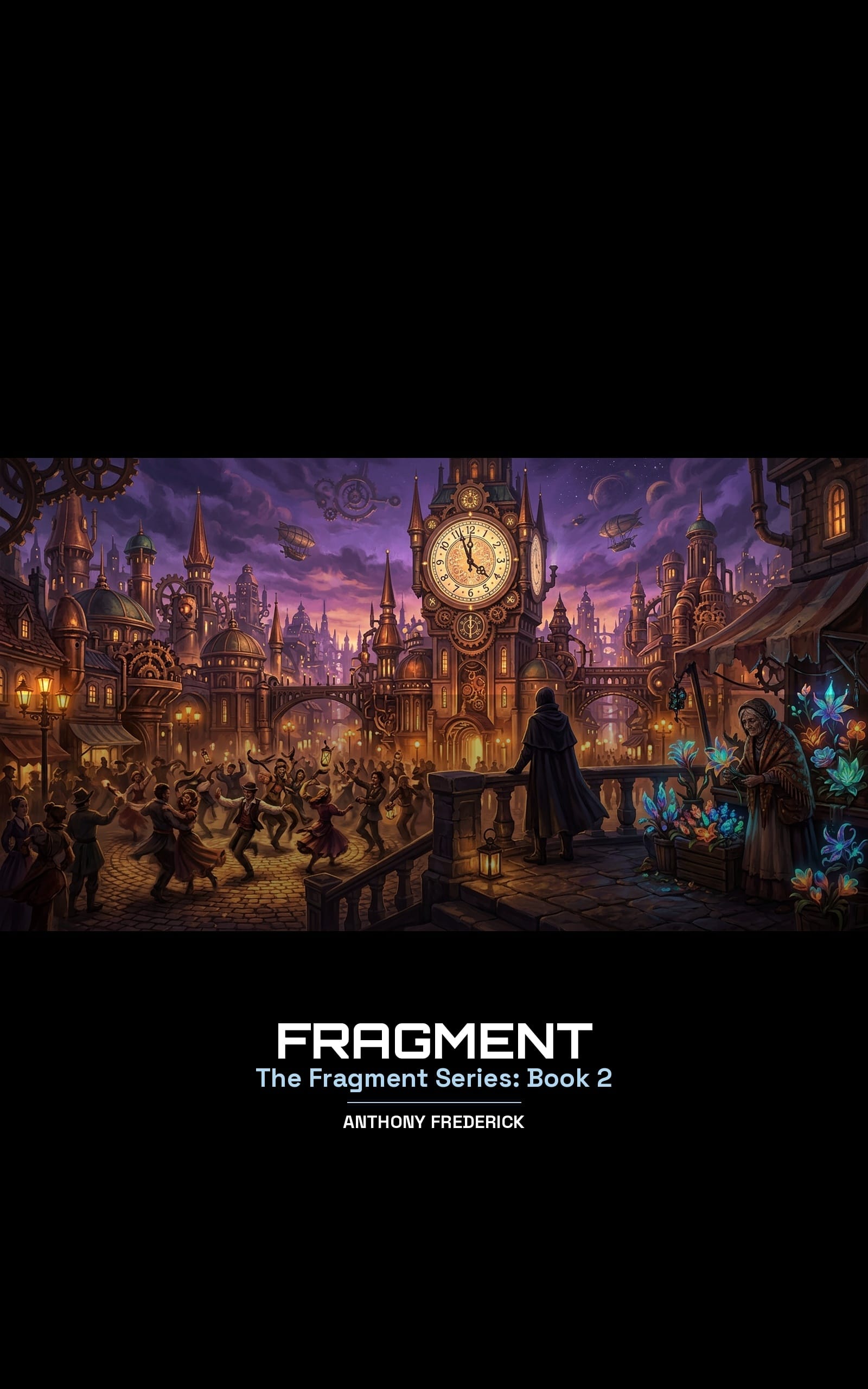
Book 2 of the Fragment trilogy
Three seconds.
That is how long the outside world experiences while you live an entire lifetime inside a Fragment. Three seconds of stillness for the people watching you. Three seconds in which your eyes go distant and your hands stop moving and something behind them — something that is not you, not yet, not here — takes the wheel.
When a person touches a Fragment, they do not watch the future it contains. They live it. Fully. Sensorily. Emotionally. Physically. They are born into it, they age inside it, they love and lose and die inside it — and then they open their eyes and the clock on the wall has advanced by three seconds.
The experience leaves a mark that does not fade. The person who touches a Fragment comes back carrying memories from a life they never lived. They know things they should not know. They have skills no one taught them. Some return speaking languages that do not exist on any map of Earth. Ask them what happened and they will struggle — because the memory is real, but the body that earned it was never theirs.
The Archive has a clinical name for what follows. They call it Timeline Dissociation Syndrome.
The people who live it call it something shorter. They call it the blur.
The blur is the slow erosion of the line between the life you were born into and the lives you have touched. The first Fragment is a shock, a violation, a gift you did not ask for. The second is easier to fall into and harder to climb out of. The third begins to rearrange the furniture of who you are. By the time someone has touched several, they are no longer certain which timeline they originally belonged to — and the terrible part is that they stopped caring which one is real, because all of them feel real, and none of them feel like home.
Some Fragment-touched individuals have forgotten which timeline they came from entirely. They move through the world as visitors in their own lives, performing the routines of a person they only half-remember being. They answer to a name that feels borrowed. They walk rooms they have supposedly walked a thousand times and feel the unsettling novelty of a stranger in a house they are supposed to own.
This is the vertigo of time — the sickness that comes not from moving through it but from realizing how many versions of it there are, and how little of it was ever fixed. You were taught that the past is behind you and the future is ahead, a single road with your name on it. The blur teaches you that the road was never single. It was always a fan of roads, and you have been standing at the hinge, and every Fragment you touch is a step off the edge.
There is one figure who appears in every Fragment timeline, wearing a different face each time but always playing the same role: the one who searches for the truth about The Archive Satellite. The Archive calls this figure the Collector. The Collector has touched more Fragments than anyone alive. The blur is not a side effect for them. It is a condition. They no longer remember which timeline they originally came from. Their search across every story is not curiosity. It is a desperate, starving attempt to find the one thread of reality they were torn from — to remember, before the blur takes even the wanting.
FRAGMENT: Book Two — The Blur — is the book about what it costs to know too much future. It is about the people the fragments found, and what was left of them afterward. It is about the slow dissolution of the self when a hundred possible lives crowd into one skull and none of them will leave.
Three seconds. A whole life. Gone.
But gone is the wrong word. The life is not gone. It is inside you now, folded into the muscle memory of hands that have never held the things they remember holding. It is in the words you speak in a language no one taught you. It is in the grief for a child who was never born in this timeline and is dead in three others.
The blur does not announce itself. It begins as a hesitation — a moment where you are not certain you are the original. It ends with the question itself becoming meaningless, because original implies a single line, and you have touched enough of the others to know there is no single line. There never was.
Consider what it means to grieve a death that never occurred in your world. Consider the weight of a love affair you remember completely, down to the smell of rain on a specific street, that no one else in your life has ever experienced and that the calendar insists never took place. Consider the terror of reaching for a skill — defusing a wire, calming a dying stranger, reading a script in a tongue with no name — and finding it already in your hands, placed there by three seconds you cannot account for.
This is the human cost of The Archive Satellite, and it is the cost no warning prepared anyone for. The signal told us the future was not one line. It did not tell us that touching the proof would unmake the person we were when we reached out.
This book will not tell you which timeline is real. That is the horror and the mercy of it. By the final page you will understand why the Aetius Group's dead monitor whispered its warning, and why the Collector, who has seen more futures than any human should survive, would trade every one of them for the memory of a home they can no longer locate.
The blur is contagious in the only way that matters: once you understand it, you cannot un-understand it. You will finish this book and look at your own hands differently. You will wonder, in a quiet moment you did not invite, whether the you reading this sentence is the original you — or simply the one who happened to pick up the book.
FRAGMENT: Book Two — The Blur. Three seconds. A whole life. Gone. And the only thing worse than losing it is not being able to tell which life was yours to begin with. Step into the blur — but know that what you touch, you keep.
Certainty is a comfort you'll trade for the truth. Fragment asks what's left when you do.
The Fragment Trilogy
In This Series:
Also explore our other universes: 7-Best-Cyberpunk-Book-Series The-Stolen Last-Creature Tower-Of