Hard Sci-Fi in 2026: Where the Genre Is Headed — and the Universe Leading the Way
Hard Sci-Fi in 2026: Where the Genre Is Headed — and the Universe Leading the Way
The hard sci-fi genre is experiencing a remarkable transformation in 2026. After decades where soft sci-fi and space opera dominated bestseller lists, readers are demanding something different — stories that respect the laws of physics while delivering the emotional depth that makes fiction unforgettable.
Three trends define this shift:
The Physics Renaissance. Readers have grown tired of stories where the science is an afterthought. The success of novels like Project Hail Mary proved that audiences will embrace technical precision when it serves the story. In 2026, the bar is higher than ever: readers expect their FTL drives to have consequences, their time travel to respect causality, and their artificial intelligence to feel genuinely alien.
The Indie Revolution. Traditional publishers played it safe through the early 2020s, recycling proven formulas. But indie authors — freed from corporate gatekeeping — have been pushing boundaries. MesoBlack Media's connected universe model represents this shift: six distinct franchises sharing a single timeline, each exploring a different sub-genre through the lens of hard science fiction. It's a structure that traditional publishing would never risk.
The Demand for Stakes That Matter. Generic space battles no longer cut it. Readers want stories where the physics isn't just backdrop — it's the conflict. Where the technology has a cost. Where the rules of the universe are consistent enough that you can feel the tension when they're about to break.
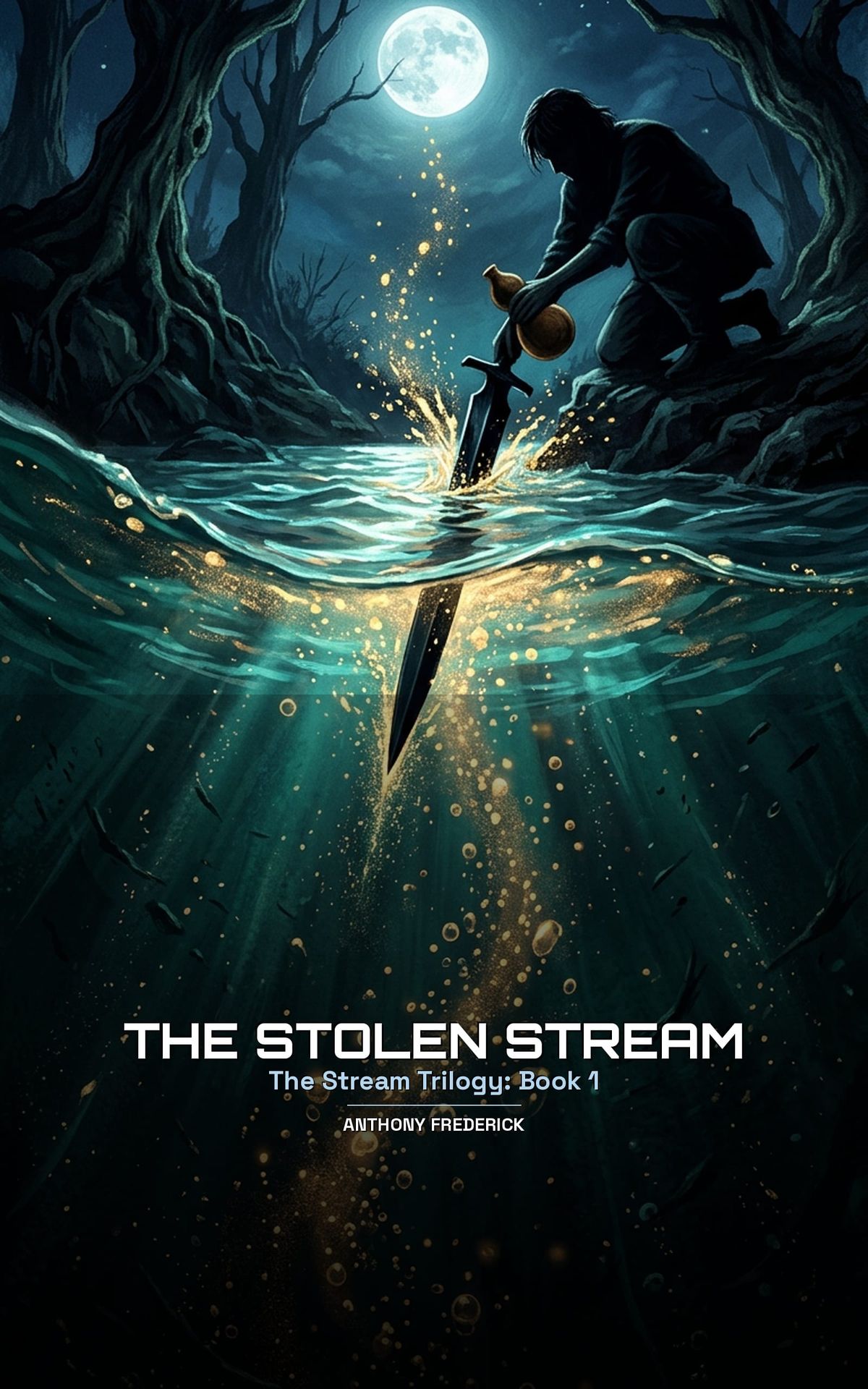
But one universe is taking this further than anything else in the genre right now. Where most hard sci-fi gives you one big idea — one theoretical breakthrough, one alien encounter, one timeline — The Stolen Stream gives you a complete economic system built on stolen time, and asks a question that will haunt you long after you put it down.
What if time replaced money?
That's the terrifying premise at the heart of The Stolen Stream. Not time travel as a plot device — time as a currency. The rich don't just have more money; they have more years. The Temporal Mechanics system means every transaction, every debt, every contract is denominated in time itself.
The Signal Tax is the rule that governs everything: for every decade you travel through the Stream, you lose one year of your natural life. It doesn't sound like much until you realize the ultra-wealthy have been harvesting centuries — and the poor are born into time-debt they can never repay.
The Frozen Light Singularity pulses at the center of the The Fracture Zone — a wound in spacetime where every stolen timeline converges. The Spire, a kilometer-tall obsidian structure, anchors the Singularity to reality. And somewhere inside it, a detective named Kai Eschendorf is learning that the Stream doesn't just connect timelines — it remembers every single one.
This isn't time travel fiction where paradoxes are hand-waved away. Every alteration creates a branching timeline. Every decision has a permanent cost. And the Distributed Toll means that when someone steals time, the debt doesn't disappear — it gets spread across everyone connected to that timeline.
In a genre that's rediscovering the power of real stakes, The Stolen Stream delivers the ultimate one: your own mortality, traded on an open market.
Dive deeper into the physics, the characters, and the conspiracy: Explore the complete Stolen Stream lore →