LitRPG Dark Fantasy: How Tower of Names Redefines Progression Fantasy

The Hollow Scoreboard
LitRPG has a formula: gain levels, learn skills, defeat enemies. Tower of Names keeps the formula — and hollows it out from within. It is a dark-fantasy progression story that uses the genre’s own scoreboard against the reader, turning “numbers go up” into something closer to a eulogy.
The genre’s appeal is visible progress. Numbers rise. Skills unlock. The protagonist becomes measurably stronger. It’s satisfying because it mimics a game’s dopamine loop: effort in, stat out, proof you are winning. The best LitRPGs make you feel the climb in your bones.
Tower of Names respects that loop enough to weaponize it. The Tower has levels. It has classes. It has Trials that grant real, visible power. A reader seeking a power fantasy will find one — right up until the cost becomes impossible to ignore.
The Cost of a Name
In the Tower, your Name is your level. Your class is your identity. And the Tower can take both away. The Trials of Ascension don’t just test strength — they test self. Each floor strips something essential. Numbers still go up, but the cost becomes existential. You aren’t leveling a character. You’re leveling a person, and the person is what gets spent.
This is the central trick: the thing the genre taught you to want — a higher number — is now the thing that erases you. A climber who reaches the upper floors is undeniably stronger — and undeniably less themselves. The scoreboard lies by telling the truth.
The Archive and the Void
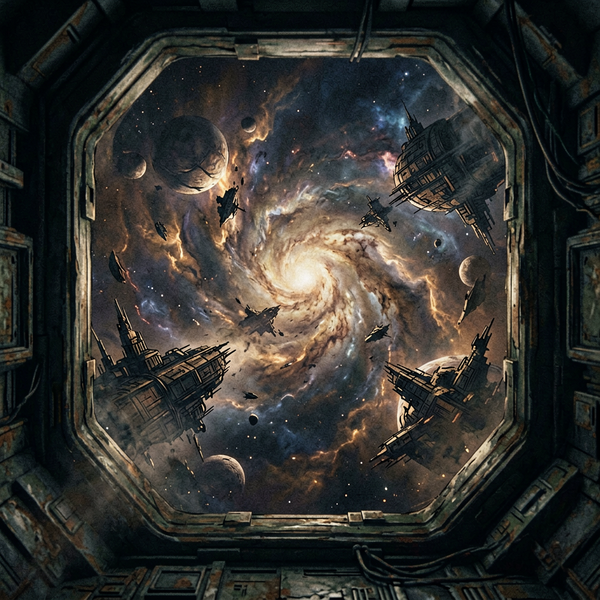
The Archive of Echoes preserves every Name ever spoken inside the Tower — not as a trophy, but as a graveyard. The Silent Scribes maintain it, and the Archive remembers the people who carried the Names long after those people stopped being anyone at all. The Fallen Name is a warning carved into the void: a climber who reached the summit and was unmade rather than allowed to speak what they found. The Prime Architects have purposes no amount of leveling can prepare you for.
Where standard dark fantasy trades in curses and doomed bloodlines, Tower of Names trades in systems. The horror isn’t a witch’s spell. It’s a UI you can’t log out of, designed by architects who finished the game before you started.
The Unasked Question
Tower of Names asks the question every LitRPG avoids: if you can become anyone, who were you before you started climbing? The genre usually answers by giving the hero a clear self to protect. Tower of Names gives you a self that the climb is specifically engineered to consume. The higher you go, the less “you” remains to enjoy the power you’ve won.
For the deeper mechanics of the structure itself, see . For the universe hub, the gathers every related page.
The genius is that it never stops being fun to read. The progression still lands. The unlock still hits. The difference is that each hit carries a shadow — the reader starts rooting for the climb and dreading it at the same time. That tension is exactly what separates a subversion from a lecture. Tower of Names doesn’t scold progression fantasy. It completes it.
More from the Tower Of Names universe: Tower Of Names Universe | Tower Of Names Book 1 | Tower Of Names Book 2
Related: Tower Of Names Complete Guide · Tower Lore Deep Dive · Complete Lore Guide 14