
Tower of Names — Free Sample Chapters
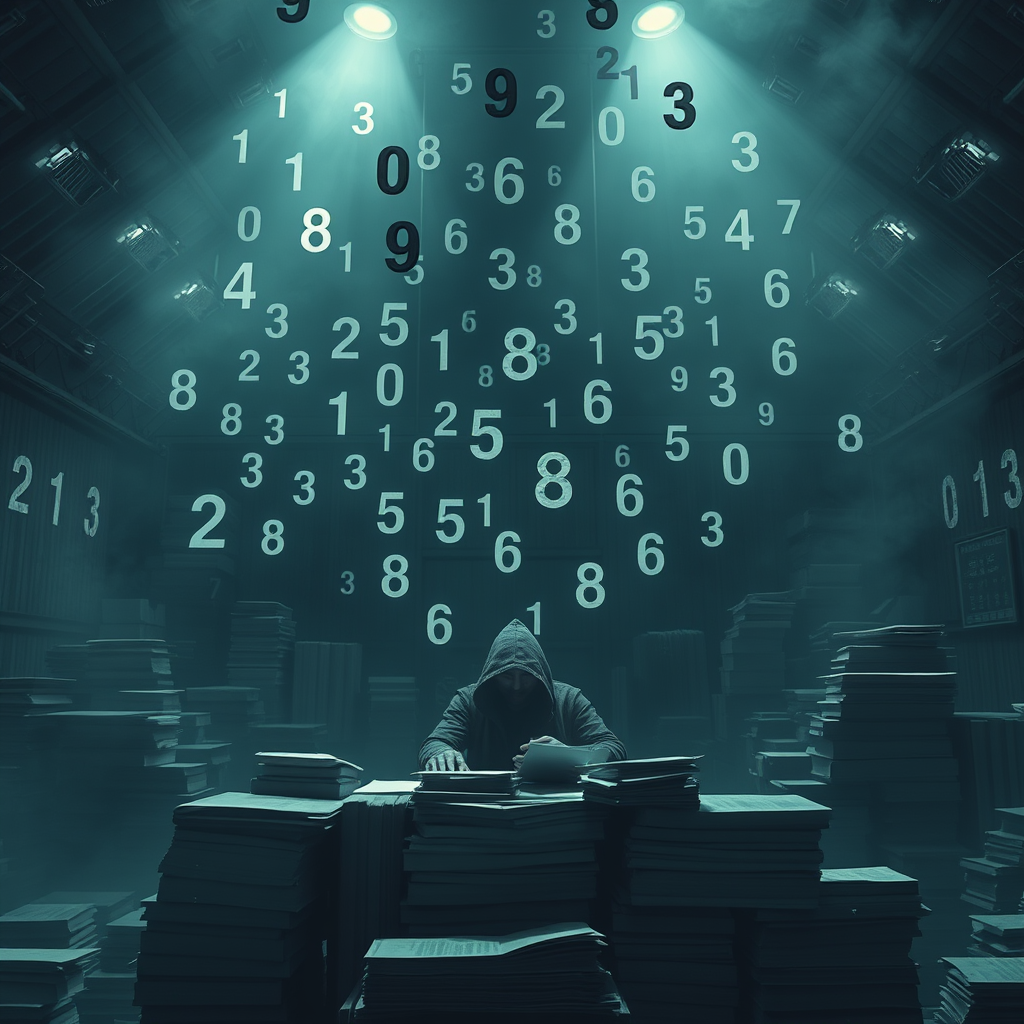
Tower of Names
Free Sample — First 3 Chapters
LitRPG Identity Erasure — First 3 Chapters
Like what you read? Get the Complete Box Set — $9.99 →
Chapter 1: Chapter 1
The tower rose from the center of the plaza like a black needle piercing the sky. It absorbed light rather than reflecting it, creating a patch of darkness deeper than mere shadow. Its surface was smooth, without any visible joints or seams. The plaque at its base was the only feature that broke the monolith's perfection, but he didn't read it. He didn't need to. He had memorized its words eleven months ago, the same night he'd pressed his thumb into the seam of that cheap laminate table and felt the lie settle into his bones.
He had been planning this for three years. The name—two syllables, unmemorable—had become a second skin. The birthplace erased by disaster, the parents dead before the tower appeared, the records that no longer existed. He had practiced thinking of himself as that name until the sound of it in his own head felt almost natural.
Almost.
Six hours ago, he had left the rented room without looking back. Now his fingers twitched at his sides, craving the familiar pressure of the table's edge, the grounding creak of laminate. But there was nothing here to ground him. Only the black needle waiting, and the gap between almost real and real that he was about to test.ENTER AND BE FORGOTTEN.
Four words. A command and a promise. The tower would take everything he was and give him nothing in return except the chance to earn it back.
Hundreds had entered before him. Fifty-seven in the last three days alone. Most would never return. The survival statistics he had compiled from leaked data were brutal: one in five made it past Floor 1. One in ten reached Floor 3. No one had ever been confirmed past Floor 7.
He had a 2% chance of reaching the tenth floor.
He did not care.
He had not come to the tower to survive. He had come to become someone else.
---
The plaza was empty now. Midnight. The soldiers had fallen asleep in their vehicles, confident that nothing would happen in the dead hours. The street lamps cast pools of orange light that he passed through and left behind.
He moved low along the edge of the plaza, keeping to the shadows where the lamp light didn't reach. The cobblestones beneath his boots were worn smooth by decades of feet, pilgrims, tourists, journalists, the desperate, but the pattern of his own steps made no sound. He had practiced this too. Three years of planning, and every detail had been rehearsed.
Halfway across the plaza, a vehicle door opened.
He froze. He dropped to a crouch behind a low retaining wall. The stone was cold against his back, rough with age, and he could smell the exhaust from the military trucks, diesel and burnt oil and something metallic, acrid and thick enough to coat his tongue. A soldier stepped out, stretched, lit a cigarette. The flare of the lighter was bright enough to cast the soldier's face in orange relief for a half-second, and the tobacco smoke drifted toward him, sharp and dry.
The soldier did not see him.
He waited. He counted his heartbeats. Forty-seven of them before the soldier crushed the cigarette under a boot and climbed back into the vehicle. The door closed with a dull, final thud.
He did not move for another full minute. When he finally stood, his knees ached from the crouch and the cold had seeped through the fabric of his trousers, leaving his skin numb and prickling. A physical price, and he had not even touched the tower yet.
The tower grew larger with each step, not because he was approaching it but because it seemed to expand as he drew near, as if it were making room for him. The air changed as he crossed the final stretch of cobblestone, thinner, colder, charged with something that made the hair on his arms stand up and his scalp tighten. He could taste it now, a mineral sharpness on his tongue like ozone after a lightning strike, metallic and electric. The smell was wrong too, not the exhaust and dry dust of the city, but something older. Rock that had never been warm. Air that had never been breathed, stale and sterile and utterly dead.
He did not stop at the base. He did not touch it tentatively the way the curious had. He did not pray or weep or hesitate.
He placed his hand flat against the stone.
The surface was not smooth the way he had imagined from a distance. It was textured, a microscopic roughness that he could feel only because he was pressing his entire palm against it, a grit like fine sandpaper against his skin. The texture of a thing that had been polished by forces beyond human understanding, worn down by something that was not wind or water.
It was cold. Not the cold of stone that has sat in night air, but a deeper cold, a cold that came from somewhere else. The cold seeped into his palm, traveled up his arm, settled in his chest like a block of ice. It did not feel like temperature. It felt like subtraction. Like something being taken away.
His fingers began to ache. The cold reached his teeth, made them ache in their sockets, sent a sharp pang through his jaw. A thin shudder ran through him, not from fear, but from the sheer physical shock of contact with a surface that had no business existing in the world he had grown up in.
And then the cold became light.
---
Part II: The Anteroom
The first thing he noticed was the smell, wet earth, pine needles, the ghost of ozone, and something else beneath it, something green and growing like crushed ferns after a storm. The smell of a place that was alive, that breathed. He inhaled deeply, and the air felt different in his lungs, heavier, moister, thick with something that made his chest expand further than it had in hours, the humidity settling on his skin like a warm cloth. The air of a forest after rain, thousands of miles from any city.
The second thing he noticed was the silence. Not the silence of emptiness but the silence of attention. The silence of a thousand people holding their breath. It pressed against his ears, soft and immense, the way deep water pressed against a diver's body, and he could hear his own heartbeat thudding in his temples.
The third thing he noticed was the light. Gold. Warm. Constant. It came from everywhere and nowhere, from the walls themselves. It fell on his skin like the light of a late afternoon sun, but there was no source, no windows, no lamps. The chamber generated its own day, and the warmth of it settled into his chilled bones, loosening the knot of cold that had formed in his chest.
The floor beneath his feet was not stone. He looked down and saw what appeared to be polished wood, wide planks of a dark timber he did not recognize, laid in a herringbone pattern that seemed to shift when he stared too long. His boots made a hollow sound against it, a sound that was swallowed by the vastness of the space before it could echo, absorbed by the golden haze. The wood was warm under his soles, warmer than the tower's exterior had been, and he realized with a start that the temperature of the Anteroom was exactly body temperature. Not comfortable. Not uncomfortable. Neutral. As if the room had matched itself to him.
The chamber was impossibly large. The ceiling was invisible, lost in a haze of golden light that faded into darkness. The walls stretched to either side, curving inward with a geometry that seemed to fold in on itself. At the center, the Wall of Names rose like a cliff face, its surface covered in carved letters that glowed with their own light, an endless tapestry of human identity. The names were not arranged in rows or columns. They spiraled, intersected, overlapped. A chaos of identity that somehow resolved into order the longer he looked.
He could feel his own name calling to him from somewhere within that wall. A pull, a resonance, a vibration in his bones that hummed low in his chest like a second heartbeat.
And beneath that hum, fainter, almost imperceptible: another resonance. The false name. Waiting.
---
A figure stood at the edge of his vision.
It was seven feet tall, its body composed of the same black stone as the tower's exterior. The j
Chapter 2: Chapter 2
The gold light did not settle.
It trembled. It rippled across the Wall's surface in waves that moved against the grain of the carved letters, disturbing the steady glow that had illuminated the Anteroom for as long as the tower had existed. The names nearest his—the real one, dark now, hollow, forgotten—flickered in sympathy, their gold light dipping and surging as if the Wall itself was unsure of what it had just recorded. The air around the disturbance grew thin and cold, carrying a faint metallic tang like ozone after a lightning strike.
He pulled his hand from the stone and took a step back. The stone was warm where his palm had pressed, but the warmth was already fading, replaced by a chill that seeped into his fingertips.
The faint carving of his false name continued to pulse, its dim light beating with a rhythm that matched nothing in the chamber. Not his heartbeat, not his breathing, not the steady pulse of the names around it. It was an arrhythmia in the Wall's ledger, a skipped beat in the tower's accounting, and the system was struggling to incorporate it into its calculations.
He watched the ripple spread. It traveled from his false name outward, a disturbance moving through the Wall like a stone dropped into still water, and everywhere it passed, the names flickered once, twice, three times before settling back into their steady glow. Except for the names nearest his. Those remained unsettled, their light quivering, their carvings seeming to shift by fractions of a millimeter as if the Wall was reconsidering their placement. The stone beneath his feet vibrated with a low, almost subsonic hum, like a great machine laboring under an unexpected load.
The tower was not rejecting him. The tower was recalculating.
He had been right. He had introduced a variable that the system had not anticipated. And now the system was adapting, recalibrating its expectations, adjusting its parameters, incorporating the anomaly into its model of what a climber could be. The tower was not omniscient, only infinitely adaptive. It learned. It evolved. It would not be fooled the same way twice.
But it had been fooled once, and that was enough.
He let out a breath he had not realized he was holding. His chest was tight, his pulse elevated, his palms damp with a cold sweat that smelled faintly of copper. He had gambled everything on a theory, that the tower's system, for all its impossible power, was still a system, and systems could be gamed. The theory had held. The false name was inside. He was inside. And the tower, for all its ancient, patient intelligence, had just been outmaneuvered by a liar. The exhilaration that followed was not joy. It was not relief. It was the cold, clinical satisfaction of a prediction confirmed, the same satisfaction a mathematician feels when a proof resolves, or a surgeon feels when an incision lands exactly where it was meant to. He had not come to the tower to feel joy. He had come to the tower to escape. Joy was for people who had not spent decades learning to calculate their every move.
He was not one of those people.
---
The other entrants had stopped what they were doing.
Twenty-three faces turned toward him, some openly, some with the furtive glances of people who did not want to be seen watching. The praying woman had interrupted her prayers. The man with the spread arms had lowered his hands. The trio of siblings, he was now certain they were siblings, had broken their circle and were staring, their linked hands falling apart as if the connection had been severed by the disturbance in the light. The chamber had gone silent, the only sound the faint rustle of clothing and the whisper of breath.
Only two people in the chamber had not stopped.
The woman in military fatigues was still moving, her eyes still scanning the Wall, her stride still carrying the economy of motion that marked her as someone who had been trained to function under conditions that would paralyze most people. She had noticed the disturbance, he saw her eyes flick toward him, assessing, but she had not allowed it to interrupt her search. She was hunting something specific, and the anomaly was a variable she had already factored out.
The meditating young man had not opened his eyes. He sat cross-legged on the polished floor, his breathing deep and even, his posture perfectly straight. The ripple in the Wall had passed through the section nearest him, disturbing the names within arm's reach of his position, but he had not reacted. He was either profoundly centered or profoundly oblivious, and in a place like the Anteroom, the difference between those two conditions might determine whether he survived.
The old man had stopped sobbing. He was looking at the section of the Wall where the disturbance had originated, at the faint, flickering name that did not belong, and his expression was not fear or confusion but something closer to recognition. As if he had seen this before. As if he knew what it meant.
That was interesting. He filed it away.
---
He became aware, gradually, that the chamber was waiting.
Not the entrants. They were merely paused, caught in the moment between the event and their response to it. The chamber itself was waiting. The gold light was holding its breath. The shadows at the edges of the Anteroom had deepened, their edges sharper, their movements more deliberate. The figures that moved between the alcoves, the shadow-shapes that he had noticed earlier, had all stopped, their forms turning toward him like flowers turning toward the sun. The temperature in the room dropped by several degrees, raising goosebumps on his arms.
The tower was paying attention.
He had asked for anonymity. He had asked to be forgotten. The false name was supposed to make him invisible, one among billions, a name without history or weight, a climber the tower would process and discard like all the others.
But the false name had done the opposite. It had made him interesting.
The tower was not supposed to find anyone interesting. The tower was a system, a machine of impossible scale, processing lives the way a factory processed raw materials. It did not have favorites. It did not have curiosities. It did not have attention.
And yet, here it was. Paying attention to him.
The First Accountant stepped out of the shadows.
---
Part II: The Accountant's Judgment
The stone figure emerged from the darkness between two sections of the Wall with the silence of something that had been standing there all along, waiting for the precise moment when its presence would be most effective. Its blank face was tilted toward him, its book open in its hands, its too-long fingers resting on the pages as if it had been reading a passage and had paused mid-sentence to look up. The air around it was still and cold, carrying the scent of dry dust and ancient stone.
He met its gaze, or what passed for its gaze. He did not flinch. He had flinched before, in moments that had demanded flinching, and he had learned that the flinch taught him nothing. Standing still, breathing evenly, giving nothing away, that worked.
The First Accountant stepped closer. Its footsteps made no sound on the polished floor, none in the dense silence of the Anteroom. It moved with a weight impossible for something made of stone, gliding across the surface as if gravity was a suggestion it had chosen to ignore.
It stopped five feet from him. Close enough to see the details of its construction, the faint seams where its stone body had been assembled, the microscopic fissures tracing patterns across its chest and shoulders, the way its fingers bent at angles human anatomy could not accommodate. The book in its hands glowed with a light that matched the Wall, and new lines of text had been added, paragraphs of dense, angular script describing something the Accountant had just witnessed. The pages felt rough and warm, like sun-baked clay, even from a distance.
It tilted its head. The gesture mimicked curios
Chapter 3: Chapter 3
The subtraction began before he saw the light.
A cold hand pressed through his skull, fingers brushing against the tissue of his memories. He felt himself becoming fewer—layers peeling away, discarded in the dark between floors. His skin tingled where the layers had been removed. Copper and ozone coated his tongue.
He held on to the false name. He held on to the lie.
The probing stopped. The cold hand withdrew.
He emerged into a library that stretched beyond the reach of any horizon. The second thing he noticed was the temperature. Cool. Not cold, but cool—a cool that preserved things, that slowed decay, that kept pages from yellowing and ink from fading. The air was dry, carefully climate-controlled, maintained at a precise level of humidity that would keep paper stable for millennia. The Archive was built to last, and the conditions reflected that purpose.
The third thing he noticed was the silence. Not the silence of an empty room, but the silence of a room that was full—full of words that had not been spoken, full of stories that had not been written, full of lives that had not been recorded. The silence was heavy. The silence pressed against his ears, filled his head with the absence of sound. It had texture—velvet against his eardrums, muffling everything except the soft rustle of his own clothing.
---
Part II: The Endless Library
The Archive of Silence was not a building. It was a world.
Shelves rose from the floor and vanished into a ceiling too high to see. They extended in every direction, row after row, a labyrinth of knowledge with no beginning and no end. Dark wood gleamed with a soft, oiled finish, surfaces polished to a mirror shine. Books bound in leather of every color—red, blue, green, black, white, gold—lined the shelves, their spines blank, unlabeled, waiting.
He stood at the entrance and tried to take its measure. He failed. The Archive was too large, too vast, too complex for any single mind to comprehend. Trying to measure the ocean with a teaspoon.
He tried anyway. He counted the shelves in his immediate field of vision—forty-seven rows, each one extending at least two hundred meters before disappearing into the haze of distance. He estimated the number of books per shelf—roughly thirty, give or take, depending on the thickness of the bindings. Nearly thirty thousand books within sight. And the Archive extended far beyond what he could see, in every direction, for an unknown distance.
How many memories had been written into these books? How many lives transcribed onto these blank pages? How many climbers had passed through this floor, leaving pieces of themselves behind?
He did not know. He suspected the Archive itself did not know. It simply collected, growing larger with each passing climber, expanding to accommodate the endless stream of memories that flowed into it.
The wood of the shelves felt warm beneath his fingertips when he reached out to touch it. Not the warmth of sunlight or body heat, but a deeper warmth—the residual heat of countless hands that had touched the same surface before him. The Archive was old, its age written into the wood, into the leather, into the dust that settled in the corners of the shelves, fine as powdered bone.
He walked forward.
His footsteps made no sound on the floor. The stone absorbed noise the way the tower's exterior absorbed light—swallowing each footfall before it could echo, leaving the silence intact. His breath was the loudest thing in the room: a soft, rhythmic hiss that seemed obscenely loud in the absolute quiet.
He passed row after row of shelves, each one identical to the last, each one holding books that appeared brand new despite their leather bindings and aged paper. The books were perfect, pristine, untouched—waiting for the first hand to open them, the first pen to write in them, the first memory to fill their pages.
He reached out and touched one of the books. The leather was warm beneath his fingers, as if the book were alive, and the surface had a slight tackiness—the residue of oils from generations of hands. He pulled it from the shelf and opened it.
Blank pages. Every single one.
He turned to another book. Same thing. Blank pages.
Another book. Another. Another. Every book in the Archive contained nothing but empty pages, waiting to be filled.
He opened a book bound in deep red leather, the color of dried blood. The pages were creamy white, thick, textured—a paper that felt expensive, that felt permanent. He ran his finger across the first page, feeling the grain of the paper, the slight resistance of the fibers. Nothing. Blank.
He opened a book bound in black leather with gold trim. Same thing. Blank pages so white they seemed to glow in the dim light of the Archive.
He opened a blue book, a green book, a book with no color at all—just the bare, unbleached leather of the binding. Every single one was blank. Every single one was waiting.
This was the purpose of the Archive, he realized. It was not a storehouse of existing knowledge. It was a receptacle for new knowledge—the knowledge that the entrants carried with them. The memories of their lives. The stories of their pasts.
The Archive of Silence was a memory-writer. And the currency it demanded was the past itself.
He stood in the middle of the endless library, surrounded by millions of blank pages, and he understood the weight of what the tower was asking. It did not want his strength, his courage, his skill. It wanted his history. It wanted the raw material of who he was, the accumulated experiences that had shaped him into the person who had entered this place.
The tower wanted to consume his past. And the Archive was the mechanism of that consumption.
He felt a cold certainty settle into his bones. The Archive was not a test. It was a toll booth. And the toll was everything you had ever been.
---
Part III: The Cost of Memory
He walked deeper into the Archive, following the sound of weeping.
The sound was faint at first, barely perceptible over the heavy silence. But as he walked, it grew louder—a raw, ragged sobbing that echoed through the corridors of shelves. The sound bounced off the wood and leather, refracting through the labyrinth, making it impossible to tell exactly where it was coming from. He paused, closed his eyes, and listened. The sobbing came from his left. He turned and followed it.
The shelves grew closer together here, the passages narrowing, the light dimming. The Archive was changing, responding to the presence of grief, shaping itself around the pain of its inhabitants. The wood of the shelves seemed darker in this section, the leather bindings more worn, the air heavier with the weight of what had been surrendered. A faint, sour smell hung in the air—the smell of old tears, of sweat, of fear.
He found the source of the weeping in a small alcove off the main corridor. A man he had seen in the Anteroom—the one who had entered just after him, a middle-aged man with graying hair and a face that had once been kind but was now twisted with anguish.
The man was sitting at a desk, hunched over an open book. He held a pen in his hand—a pen that had not been there a moment before, a pen that the Archive had provided. The pen was elegant, silver-tipped, its barrel made of the same dark wood as the shelves. It seemed to glow faintly in the dim light, as if it were alive with the memories it was meant to capture.
The man was writing, his hand moving across the page in a frantic, desperate scrawl. Each word he wrote cost him something. He could see it happening—a flicker of light leaving his body with each stroke of the pen, a piece of his past detaching itself and flowing into the book. The man was writing his memories into the Archive, trading his history for passage to the next floor.
He was weeping as he wrote. His childhood was disappearing. His first memories, his first loves, his first heartbreaks—all of it was being transferred from his mind to the page. He would
Enjoyed the sample? Get the complete 3-book box set.
Available in 10 languages. Instant download.