The Dark Legacy of Memento Mori: How Neural Recording Shaped Neon Grave's Cyberpunk World
Explore the origins and impact of neural recording in Neon Grave—a cyberpunk noir where memories define reality.
The Dark Legacy of Memento Mori: How Neural Recording Shaped Neon Grave's Cyberpunk World
The Birth of a Revolution—and a Nightmare
In the neon-drenched underworld of Neon Grave, memory isn’t just a fleeting thought—it’s a commodity, a weapon, and a curse. The catalyst for this dystopian reality was Memento Mori, a tech conglomerate that in 2027 unveiled the world’s first neural recorder, a revolutionary chip capable of capturing and storing human thoughts, emotions, and experiences with near-perfect fidelity.
The implications were immediate. Governments, corporations, and criminals scrambled to harness this power. For the first time, memories could be bought, sold, or stolen—turning the human mind into the ultimate black market. But as with all great advancements, the technology came with a price: identity theft became the most insidious crime in Cascade.
From Hope to Horror: The Neural Recorder’s Dark Evolution
The early neural recorders were bulky, intrusive, and prone to memory degradation. Early adopters—often the terminally ill or the ultra-wealthy—uploaded their lives in the hopes of extending their existence. But the chips were fragile. A single electromagnetic pulse could wipe decades of stored consciousness. Worse, hackers discovered how to infect and corrupt neural data, turning memories into tools of psychological warfare.
By the time Neon Grave unfolds in the 2070s, the technology has evolved into something far more sinister. The Memento Mori Neural Interface (MMNI) is now a sleek, subdermal implant, nearly undetectable beneath Cascade’s neon glow. But the black market for stolen memories—known as “Ghostware”—has exploded. Detectives like Kane Vey navigate this treacherous landscape, where a single stolen memory can mean life or death.
The City’s Soul: How Neural Recording Defines Cascade
Neural recording didn’t just change technology—it reshaped society. In Cascade, memory is currency. The rich trade their past for power, while the poor sell theirs to survive. Underground clinics offer “memory loans,” and the criminal underworld deals in “souvenirs”—stolen fragments of lives that can be implanted to manipulate, deceive, or erase identities entirely.
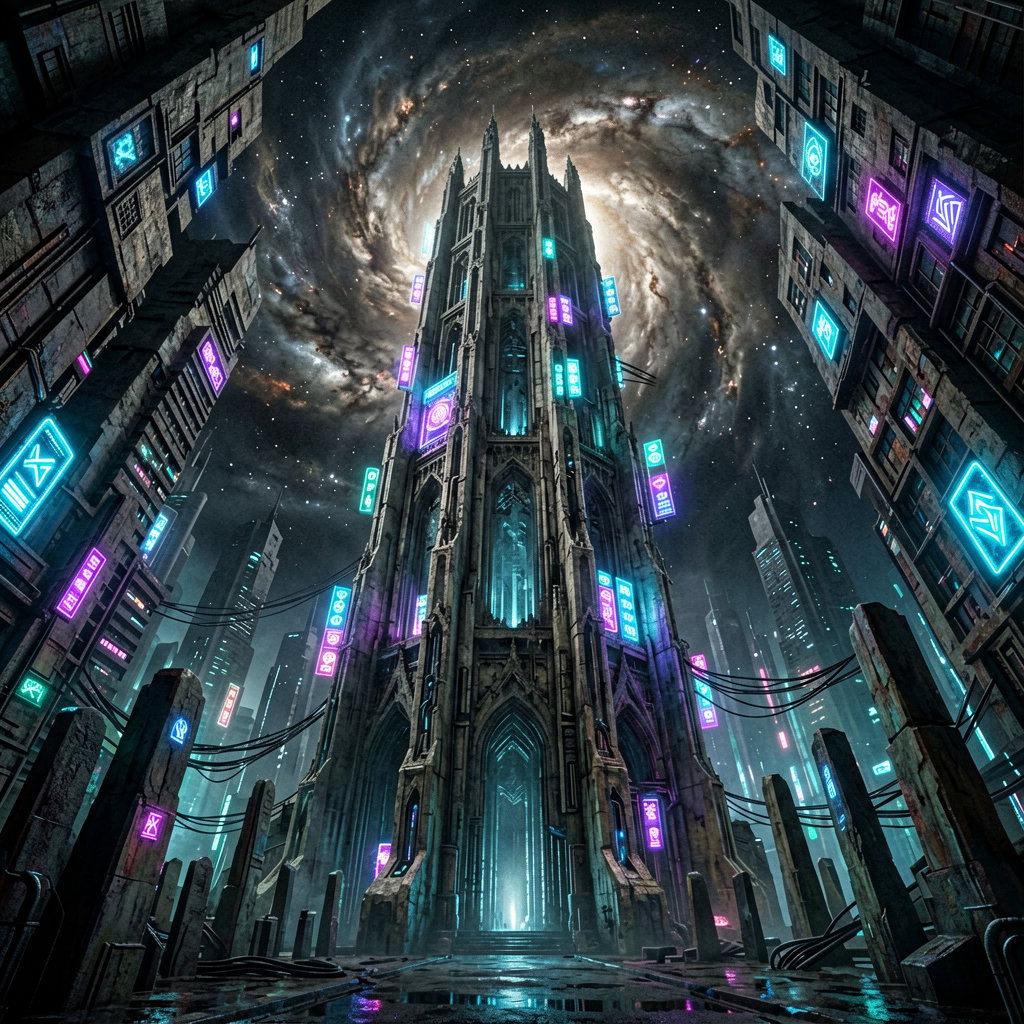
The city’s seven layers reflect this hierarchy. The elite dwell in the upper tiers, where memories are curated and pristine, while the Drowned City’s ruins hide those who’ve lost everything—including their sense of self. The constant rain, the hum of atmospheric processors, and the glow of holograms all serve as a backdrop to a world where no one can trust their own mind.
Inside the Neon Grave Lore Neon Grave is part of MesoBlack Media's wider The Stolen Stream universe. To read it right, you need the canon: Recorder, Kavanagh, Dead Channel, MEMENTO MORI, Cascade City, forty-seven. These ideas define the world's power structure, its stakes, and the people caught inside it.
- Recorder — a core part of the Neon Grave canon.
- Kavanagh — a core part of the Neon Grave canon.
- Dead Channel — a core part of the Neon Grave canon.
- MEMENTO MORI — a core part of the Neon Grave canon.
- Cascade City — a core part of the Neon Grave canon.
- forty-seven — a core part of the Neon Grave canon.