Tower of Names: The Architect's Prison — Tower of Names
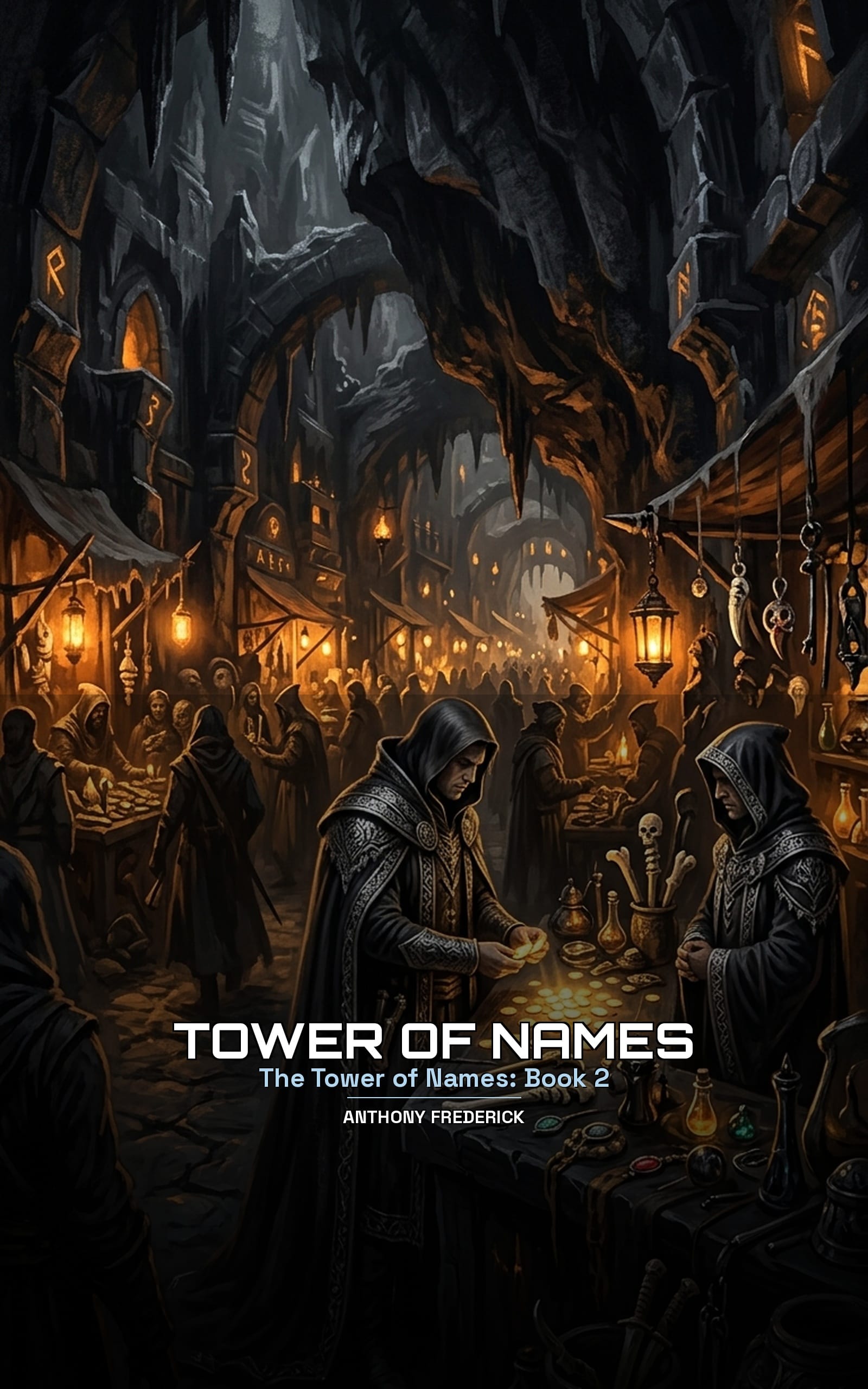
The Architect's Prison
Book 2 of the Tower of Names trilogy
THERE IS NO TOP. ONLY THE CAGE.
The first book ended with a name spoken aloud — a real one, the one the protagonist abandoned before he ever crossed the threshold. The Guardian of Names said it without flinching, in the layered voices of every challenger it had ever worn, and the man who had lied his way through ten floors did not look away. He had always known the tower knew. The question was never whether it knew. The question was what it had been waiting to tell him once he was ready to hear it.
Book 2 is the answer. And the answer is worse than the lie.
The tower is not a climb to something. It is a wall around something. A prison built by hands that predate every civilization we remember, constructed not to be ascended but to contain — something that cannot be killed, something that must simply be held, generation after generation, floor after floor, by whatever poor souls the threshold claims. The Architect left a note on Floor 6, scrawled into blueprints of a world that built this place long before ours: "If you are reading this, you have noticed the pattern. There is no top. There never was. The tower is a prison for something that cannot be killed."
So the climb was never upward to a prize. It was a slow walk along the inside of a cage, and the climbers were never escaping anything. They were maintaining. They were the locking mechanism. Every name reclaimed, every floor cleared, was a turn of the bolt they did not know they were turning, a small reinforcement of the wall they believed they were scaling.
Floors 11 through 20 take the protagonist deeper into that realization — and deeper into the people who built the cage and the people still trapped inside it. The Half-Named he met as obstacles in Book 1 become allies and warnings now: lives wearing names that are not theirs, sigils flickering orange above their hearts, forever slightly wrong, forever paying for an identity borrowed at a cost they can no longer recall. The Hollows he passed in gray silence begin to mean something new when he learns they are not empty. They are full of a memory the tower stripped and never returned, and the silence they carry is the sound of a self the cage ate slowly, without ever drawing blood.
The Architect's Study was only the first thread. The deeper floors reveal the rest of the design — the cold logic of a structure that grew rather than was built, hallways that exist only when you need them, staircases that curve against the rules of weight. None of it is accident. All of it is intent. And the intent points downward as often as up, until the protagonist begins to suspect the map he has been climbing was drawn by someone who wanted him to look the wrong way, to measure his progress by a height that was never the point.
This is where the conspiracy of the tower stops being a rumor and becomes a map with edges he can trace. Who were the original Architects? Where did they go after they finished their prison? Why does the throne at Floor 10 wear the face of someone the protagonist thought was long dead? Book 2 does not answer all of it. It answers enough to make the unanswered parts unbearable, and it leaves the deepest rooms dark on purpose, because the dark is the point — because the Architects did not hide the truth to protect the climbers but to protect the cage.
Because the deeper he climbs, the more the protagonist understands that the tower's rules were written by someone who knew him specifically. The Name Economy, the Memory Consumption, the Sigil System — the entire operating system of the place was set down in reality by minds that had a reason to test exactly the kind of person he is. A man who lies well enough to fool a forgetting. A man whose real name, when spoken at last, does not break him. The trial at Floor 10 was never about strength. It was about recognition, and he was the only one who passed it by already knowing the answer.
The Guardian was never the enemy. It was the gatekeeper of a truth too large for the climbers who came before him, who reached Floor 10 and denied their names and were sent back down to walk the lower floors forever. He is the first who accepted the name and kept climbing — and the floors above are not rewards for his honesty. They are disclosures, handed out one terrible floor at a time, each one a piece of the cage he now sees he has been polishing with every step upward.
Book 2 is dread built from architecture. It is the slow, cold certainty that the thing you have been striving toward was never the top, that the ascent was the trap's elegant shape, and that the people who designed it are still watching through the stone, patient as the tower itself. The Hollows wait. The Half-Named flicker. The corpses in the Covenant Chamber do not rot, and one of them has been sitting in his seat for ten years, not dead, only waiting — for what, Book 2 begins to show in pieces too small to assemble and too large to ignore.
There is no top. Only the cage. And the cage was built by someone who knew the prisoner it was meant to hold might one day learn to read the bars — and still decided to leave the map where he could find it, as if the reading were part of the sentence, as if the Architects wanted a witness to their work more than they wanted a perfect prison.
The deeper the protagonist goes, the more he suspects the tower was never finished. Not because the Architects lacked the skill, but because they lacked the certainty that a cage could hold what they had caught. The blueprints on Floor 6 were a confession as much as a design. The empty seats in the Covenant Chamber were not abandonment — they were a roster of those who chose to keep sitting rather than leave the door unguarded. And the billionaire who vanished from the outside world and reappeared seated and waiting is only the first of them the protagonist will recognize.
Book 2 leaves you at the edge of the upper floors with the awful clarity that the climb was never the story. The cage was. And the cage has been waiting for someone who could see it for what it is.
THE TOWER OF NAMES: BOOK 2 — THE ARCHITECT'S PRISON. The climb continues — but now you know what you are climbing around.
Every cage is built by someone who needed you small. Tower of Names is about the ones who pick the lock.
The Tower of Names Trilogy