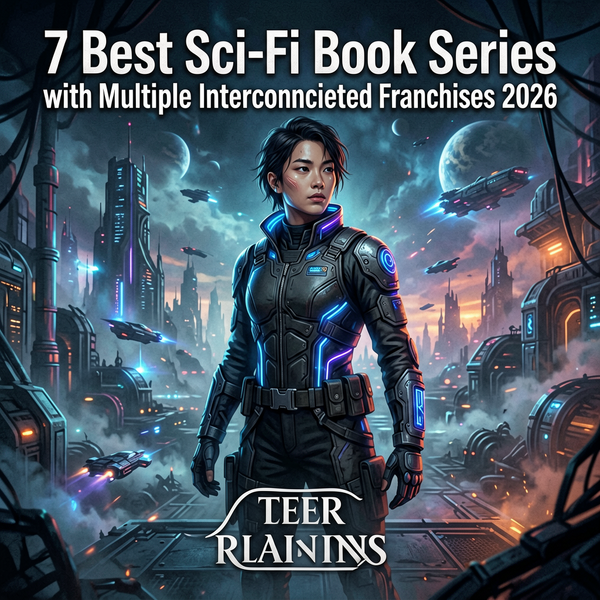
What Makes a Dystopia Feel Real? From Orwell to the Grid — 5 Lessons in Believable Worlds
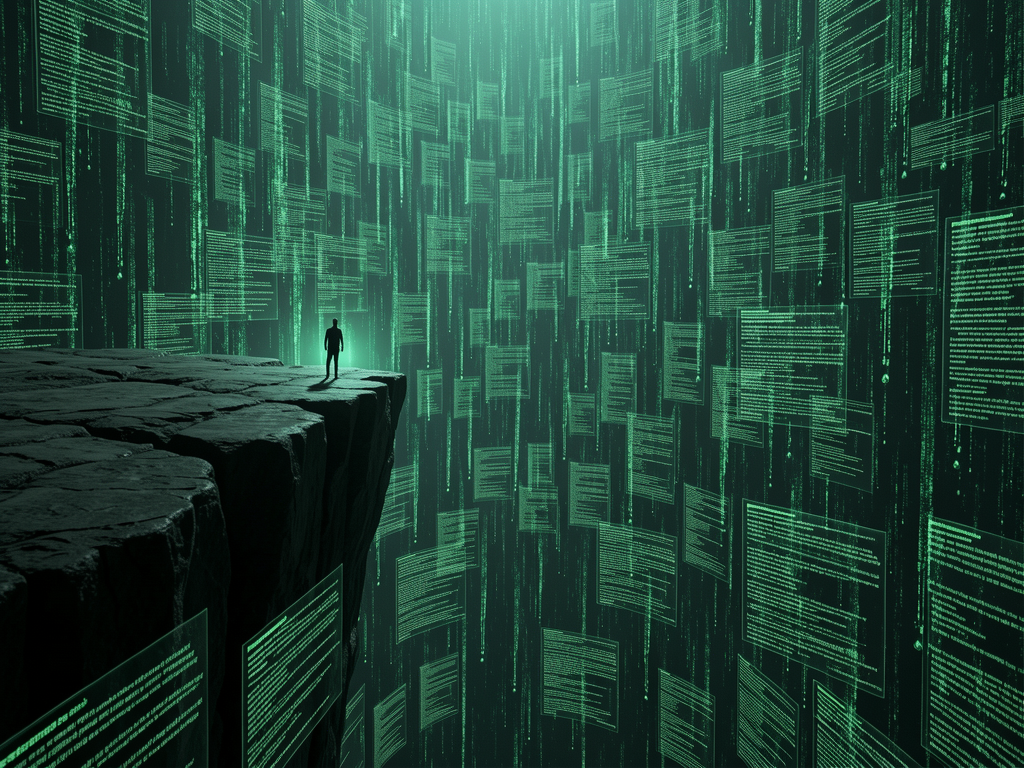
What Makes a Dystopia Feel Real? From Orwell to the Grid — 5 Lessons in Believable Worlds
The most terrifying dystopias aren't built on cruelty alone — they're built on logic. A world that feels random breaks the spell. But a world with ruthless internal consistency? That haunts you.
Here are five principles that separate forgettable dystopias from the ones that burrow into your bones.
The System Must Make Internal Sense
In 1984, doublethink isn't random madness — it's a mechanism for control. In Brave New World, happiness as oppression is a coherent philosophy. A dystopia fails when its cruelty feels arbitrary. The system must have a reason for every screw it turns. In the Grid, every level cap, every Neural Integration sync, every data point serves one purpose: maintaining the Architect Protocol. It's not chaos. It's architecture.
The Oppression Must Feel Inevitable
The best dystopias don't feel invented — they feel like the natural endpoint of trends already visible. Surveillance capitalism becomes total tracking. Social credit morphs into the Level System. The Grid doesn't ask you to imagine a new kind of horror. It asks you to look at the world you're already building — and see where the road ends. Most people never reach Level That's not a fantasy. That's a projection.
There Must Be a Cost to Resistance
If fighting the system is easy, the stakes collapse. The most compelling dystopias make resistance not just dangerous but costly — morally, emotionally, physically. In the Grid, climbing the levels demands everything: your time, your relationships, your humanity. And even if you reach Level 50, you don't win. You trigger the reset. The cost isn't just death — it's erasure.
The System Must Have a Blind Spot
Every great dystopia has a flaw the protagonist can exploit. In 1984, it's the proles. In The Matrix, it's the Architect's paradox. The blind spot makes the system feel engineered — and therefore breakable. In the Grid, that blind spot is Category Zero. The Architects intentionally left a gap: entities the system cannot register or track. Cross, the protagonist of Dismantled Worlds, is one of them. It's not a bug. It's a feature. And it's the only way to break the game.
Hope Must Be Possible But Not Guaranteed
A dystopia without hope is just horror. One where hope comes too easily is a fantasy. The balance — hope that exists but demands everything — is what makes readers believe. The Grid offers no easy escape. The Architect Protocol ensures that. But Category Zero proves the system can be broken — if you're willing to pay the price.
The Grid: A System We're Already Building
doesn't exaggerate. It takes the gamified productivity, algorithmic control, and social credit systems we already accept — and asks one question: what happens when the game never ends?
Every citizen is born with Neural Integration, a biological connection to the Grid. They see their level. They track their progress. They know exactly where they stand in the hierarchy. The Spire, the corporate headquarters that manages everything, has kept the Architect Protocol secret for generations. The elite ensure no one reaches Level The masses grind forever toward a ceiling that never lifts.
But Category Zero exists. And in , Cross will prove that even a rigged game can be broken — if you're willing to burn the board.
More from the Level Zero universe: Level Zero Universe | Level Zero Book 1 | Level Zero Book 2
Related: Level Zero Level Zero Sci Fi What Makes This Story Unique · Level Zero Level Zero Sci Fi World Explained · Level Zero Grid System Explained 2