Level Zero vs The Matrix: Which Simulation Did It Better?

The Simulation: Obscured Comfort vs Gamified Compliance
The Matrix sells you a lie so comfortable you never question it. Level Zero's Grid doesn't bother lying. It shows you the bars, the caps, the grind — and dares you to do something about it.
Since 1999, The Matrix has defined how we imagine simulated reality: a hidden prison dressed as 1999, with humans reduced to biological batteries. The simulation exists to pacify you into compliance through ignorance. You cannot rebel against a cage you don't know exists.
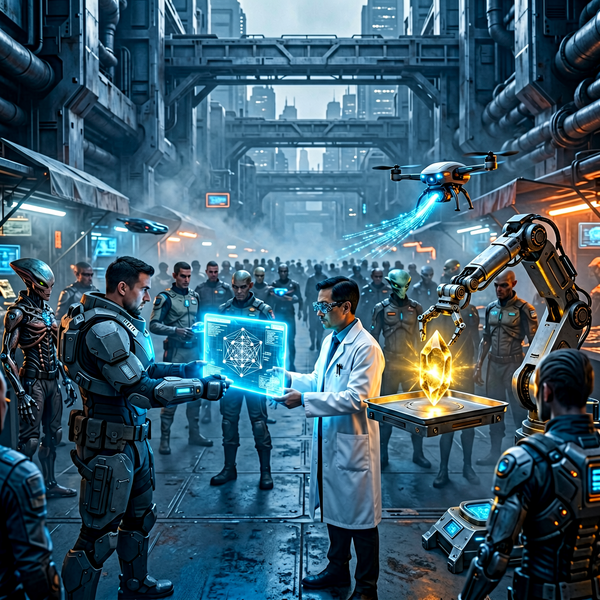
operates on a different principle entirely. The simulation is not hidden — it is visible, administrative, gamified. Citizens see their Stats in real time. They know their Level cap. They watch their XP bars fill like a second heartbeat. The Architects didn't design the Grid to deceive. They designed it to exhaust you. The system is a treadmill of permanent scarcity, where you grind forever but never reach meaningful return because the top tiers are reserved for Admin-class citizens. You know exactly how the system oppresses you. You just cannot stop grinding. That honesty makes Level Zero's simulation more terrifying than any hidden cage.
The Hero: Chosen Messiah vs Null Value Error
Neo is The One — prophesied, trained by oracles, destined to rewrite the code with a thought. His arc is the ultimate power fantasy: accept your greatness, stop bullets, save humanity. Neo is what happens when the system grants you Admin privileges.
Cross is a — a statistical error the Grid's equations cannot solve. He was not chosen. He was missed. Every Level Up is an exploit, not a destiny. His power comes from salvaged hardware — the Gauntlet, fractured Architect fragments — and from the probability matrices Mira decodes through the Synchronizer. Cross does not stop bullets. He reads the odds and moves before the shot fires.
Neo's journey is about accepting greatness. Cross's journey is about surviving mediocrity while the system refuses to acknowledge your existence. Neo is a messiah. Cross is the forgotten variable that breaks the equation.
The Villain: Philosophical Program vs Bureaucratic Administrator
Agent Smith is a program that achieves self-awareness and decides humanity is a virus. His performance is iconic, relentless, philosophical — and increasingly abstract as the trilogy progresses. He is fun to watch, but his motivation dissolves into cosmic hatred.
Administrator Vaux is not a program. He is a descendant of the Architects, born into Admin privileges, carrying the weight of a system he did not build. Vaux enforces Protocol Delta not out of malice, but out of conviction. He genuinely believes the alternative — the Permanent Null — is worse than eternal compliance. His villainy is the most dangerous kind: the bureaucrat who destroys you because he believes he is saving everyone else.
The Matrix gives us a memorable monster. Level Zero gives us something harder to dismiss: a tyrant with a spreadsheet and a conscience.
More from the The Stolen Stream universe: The Stolen Stream Universe | The Stolen Stream Book 1 | The Stolen Stream Book 2
Related: Complete Lore Guide 5 · World Explained 3 · Complete Lore Guide 6