The Stolen Stream vs. Dune: Power, Time, and Legacy
The Temporal Monopoly: Why Time Beats Spice
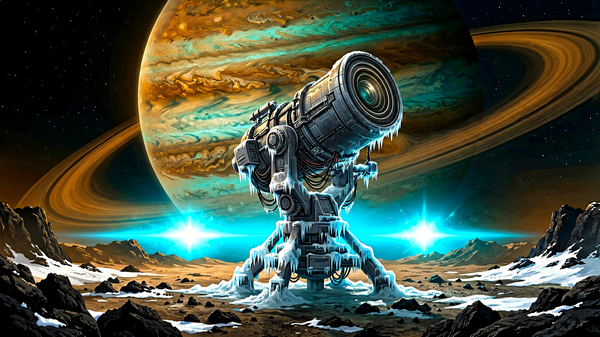
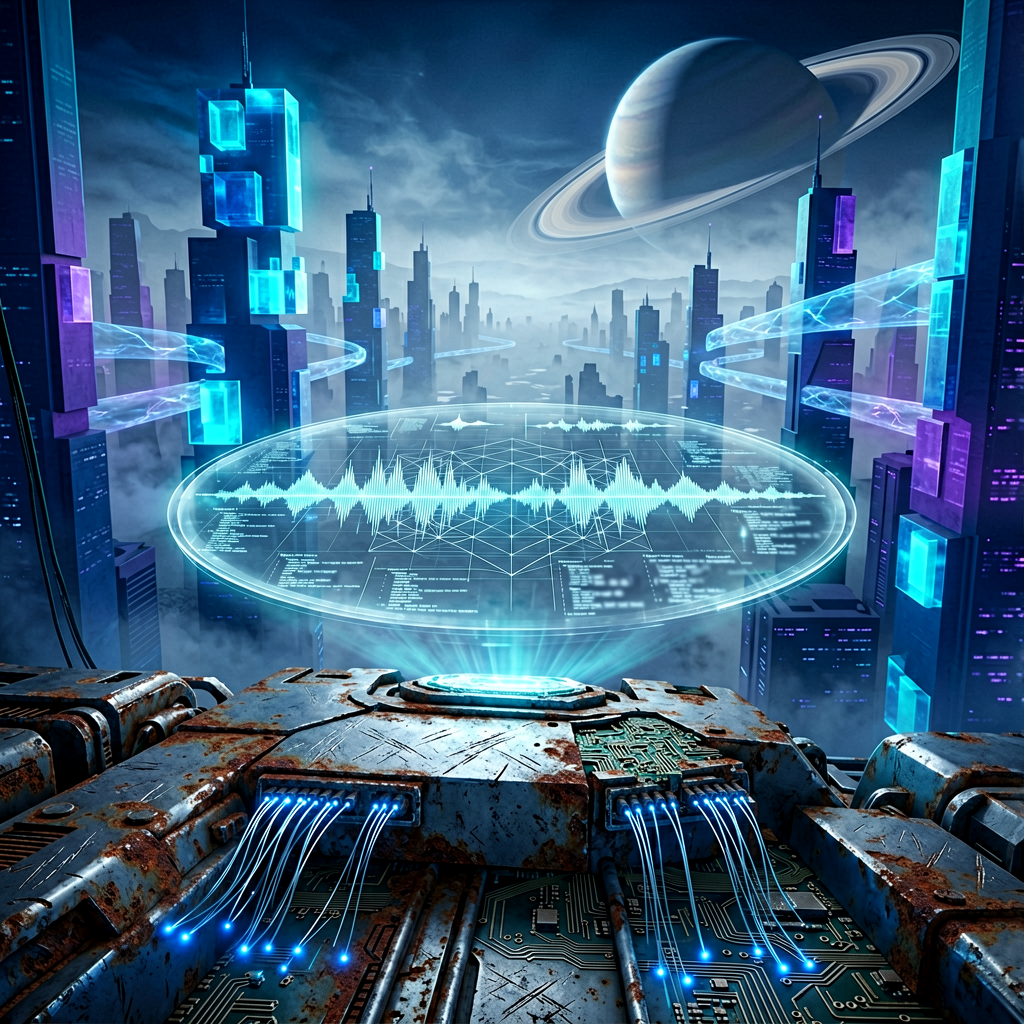
The Eschendorf family doesn't control a resource — they own the calendar itself. After 437 years of temporal monopoly through the Frozen Light Singularity device, they've proven that time, not spice, is the ultimate currency of power. While one story operates at civilizational scale across millennia, the other compresses its tragedy into a single family's biological cost, asking what individuals owe their future when every year lived is stolen from someone else.
Power: From Distributed Factions to Centralized Time
In one universe, power is fractured across competing factions — an empire, a guild, a sisterhood — all vying for control of a rare substance. The other dares to imagine something far more terrifying: a single family holding absolute dominion over time itself. The Eschendorfs don't manipulate politics; they manipulate causality. Every loan of temporal energy creates debt that compounds into dynastic power. There are no checks, no balances, no Spacing Guild to negotiate with. Just one name on every contract, every pulse of the Frozen Light Singularity, every stolen year.
Time: Biological Cost vs. Prophetic Canvas
One narrative treats time as a vast canvas for prophecy and generational strategy — futures glimpsed across millennia, choices made for civilizations unborn. The other makes time visceral, physical, and measured in stolen lifespan. Kai Eschendorf has lived through 437 years of family history but experienced only 28 firsthand. The 10:1 temporal toll makes every temporal decision a literal sacrifice of self. Time isn't abstract prophecy; it's the ache in bones that have aged decades while the world barely blinked.
Legacy: The Burden of Inherited Crime
Both stories ask what you owe the future, but one answers at civilizational scale while the other forces a more intimate reckoning. Kai Eschendorf inherits not a golden path but a criminal empire built on stolen time. The question isn't how much suffering to accept for survival — it's whether it's ethical to benefit from a system you didn't create but now control. That's the difference between prophecy and inheritance. Between choosing a monstrous future and waking up inside one.
For readers who want their power struggles compressed into a single family's 437-year temporal monopoly, [The Stolen Stream] explores this intimate tragedy in focused detail. For deeper exploration of the Frozen Light Singularity's origins and the true cost of temporal debt, [The Stolen Stream: Book 2] reveals what happens when the calendar itself becomes a weapon.
More from the The Stolen Stream universe: The Stolen Stream Universe | The Stolen Stream Book 1 | The Stolen Stream Book 2
Related: 10 1 Toll Every Time Travel Book Rules Compared · Temporal Mechanics Fiction Complete Guide · Stolen Stream Vs Hyperion Time And Sacrifice