12 Thought-Provoking Sci-Fi Books That Ask Big Questions
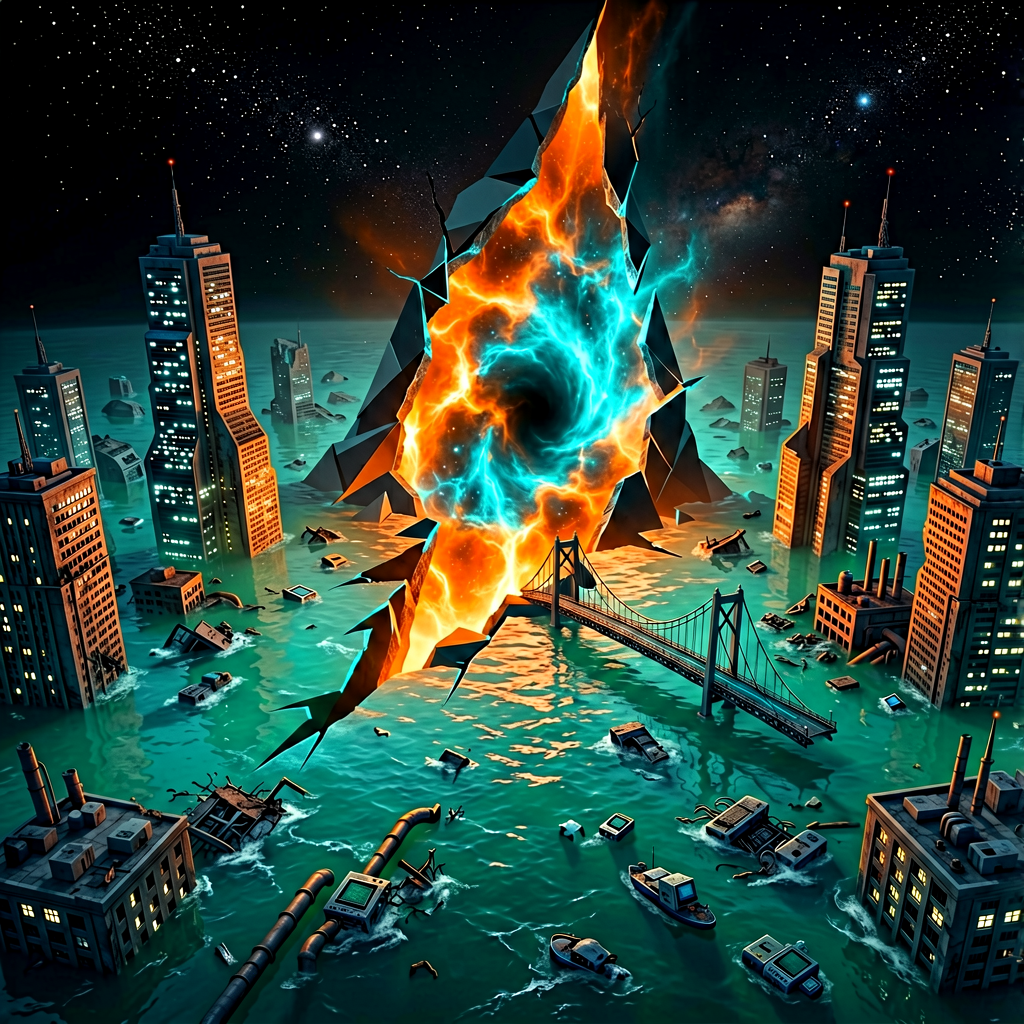
Table of Contents
- What Makes Sci-Fi Thought-Provoking?
- Books About Time and Mortality
- Books About Society and Power
- Books About Consciousness
- Why These Books Stay With You
What Makes Sci-Fi Thought-Provoking?
The books that earn this label share a few qualities:
- They take a single premise seriously. Not "what if we had time machines" but "what would time travel actually do to human relationships, economies, and the concept of identity?"
- They refuse the easy answer. The best thought-provoking sci-fi doesn't arrive at a tidy moral. It leaves you in the discomfort of an unresolved question.
- The worldbuilding serves the question. Every detail of the fictional world is in service of exploring the central idea, not decorating it.
- They change how you see the real world. After reading Blindsight, you'll think differently about consciousness. After reading Never Let Me Go, you'll think differently about personhood. The best sci-fi isn't escape — it's re-entry with new eyes.
Goodreads readers consistently flag these books in their "made me think" shelves — and they're often the same titles that generate the most passionate discussion threads.
Books About Time and Mortality
1. The Stolen Stream
The most rigorous exploration of time-as-resource in recent sci-fi. In Kai Eschendorf's world, the 10:1 temporal toll means every decade jumped forward costs a full year of lifespan — and the entire civilization is built around that brutal economics. The Frozen Light Singularity technology makes time travel possible, but the novel's real achievement is asking: what happens to human relationships, class structures, and the concept of a "life well-lived" when time itself is currency? The questions this book raises about mortality, value, and what we owe each other across time will sit with you long after the final page. Available at mesoblackmedia.com.
2. Stories of Your Life and Others by Ted Chiang
The collection that gave us Arrival. Chiang's "Story of Your Life" explores the Sapir-Whorf hypothesis through alien language — if learning a new language literally changes how you perceive time, what does that mean for free will? Every story in this collection is a philosophical hand grenade.
3. The First Fifteen Lives of Harry August by Claire North
Harry August lives his life over and over, retaining memories from each iteration. North uses the premise not for adventure but for the deepest possible exploration of what gives a life meaning when you've already lived it fourteen times. A book about time that's really a book about how to spend the time you have.
Books About Society and Power
4. The Dispossessed by Ursula K. Le Guin
An anarchist physicist from a moon colony visits the capitalist homeworld. Le Guin wrote the definitive novel about whether utopia is possible — and her answer is complicated, generous, and deeply honest. Fifty years later, nothing has surpassed it as a work of political sci-fi.
5. The Parable of the Sower by Octavia Butler
Written in 1993, set in 2024, and more relevant than ever. Butler predicted climate collapse, corporate feudalism, and the rise of a populist demagogue who promises to "make America great again." What makes it thought-provoking isn't just the prescience — it's the radical empathy at the core of the protagonist's philosophy.
6. 1984 by George Orwell
Still the benchmark. The book that gave us the vocabulary for surveillance states, thought control, and manufactured reality. If you read it in high school, read it again as an adult. It's a different, more terrifying book.
7. A Memory Called Empire by Arkady Martine
An ambassador from a small space station arrives at the capital of a sprawling empire and must prevent her home from being absorbed. Martine interrogates colonialism, cultural identity, and the violence of language with the precision of a scholar and the pacing of a thriller. The central question — can you love a culture that wants to erase yours? — has no clean answer.
Books About Consciousness
8. Blindsight by Peter Watts
A crew of post-humans encounters an alien intelligence that may not be conscious at all. Watts' central argument — that consciousness might be an evolutionary dead end, not an advantage — is one of the most unsettling ideas in all of science fiction. Tor.com called it "the most rigorously scientific first-contact novel ever written."
9. Ancillary Justice by Ann Leckie
A ship AI trapped in a single human body seeks revenge. Leckie's use of the default "she" pronoun for all characters, regardless of gender, forces readers to confront how deeply gender shapes their perception of identity. The linguistic experiment is fascinating; the story is even better.
10. Do Androids Dream of Electric Sheep? by Philip K. Dick
The novel behind Blade Runner. Dick's question — what's the difference between a perfect simulation of empathy and the real thing? — has only gotten more relevant in the age of AI. The mercerism passages alone are worth the price of admission.
11. Hyperion by Dan Simmons
A Canterbury Tales structure in space, with each pilgrim's story exploring a different dimension of consciousness, time, and human experience. The Scholar's Tale — about a father whose daughter is aging backward — is one of the most emotionally devastating thought experiments in the genre.
12. Flowers for Algernon by Daniel Keyes
A man with an IQ of 68 undergoes experimental surgery and becomes a genius — temporarily. Keyes asks: is intelligence the same as wisdom? Is knowing more the same as living better? The novel has been making readers cry and think in equal measure for over 60 years.
Why These Books Stay With You
The common thread across these twelve books: they don't let you go. They're not just stories you consume and forget. They're frameworks you find yourself applying to news headlines, personal decisions, and conversations months later.
That's the real measure of thought-provoking sci-fi. Not "did I enjoy this?" but "did this change how I see something?" Every book on this list clears that bar.
MesoBlack Media has written about how the most powerful sci-fi — from Le Guin to Butler to The Stolen Stream — functions as a laboratory for ideas that the real world hasn't caught up to yet. The books above are experiments worth running.
Why Trust This List
These twelve books were selected from decades of reading across the genre, with a specific focus on novels where the ideas drive the reading experience. Every book meets at least three criteria: it asks a genuine philosophical question, it refuses an easy answer, and it rewards rereading. No affiliate links, no paid placements — just books that will make you think.
Related in this universe
- 5 Best Nonlinear Lore Books for Hard Sci-Fi Readers
- Best Time Travel Sci-Fi Books: 11 Novels That Bend Time
Related in this universe
- 5 Best Nonlinear Lore Books for Hard Sci-Fi Readers
- The Stolen Stream Book — Complete Guide to Anthony Frederick's Hard Sci-Fi Epic
- Time Travel Physics Books: 7 Novels That Get the Science Right (2026)