The Frozen Light — The Stolen Stream
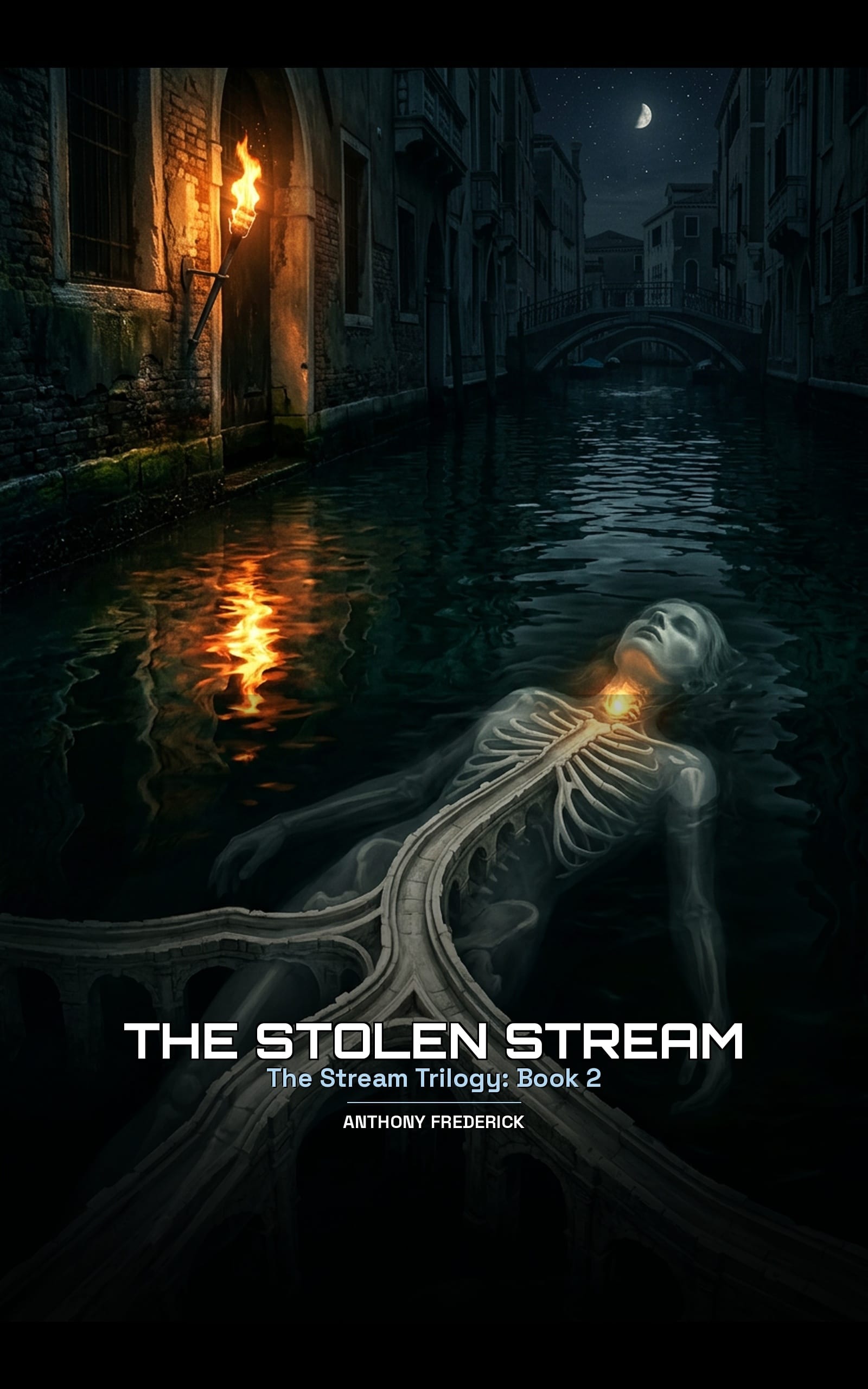
The mystery he left is hers now.
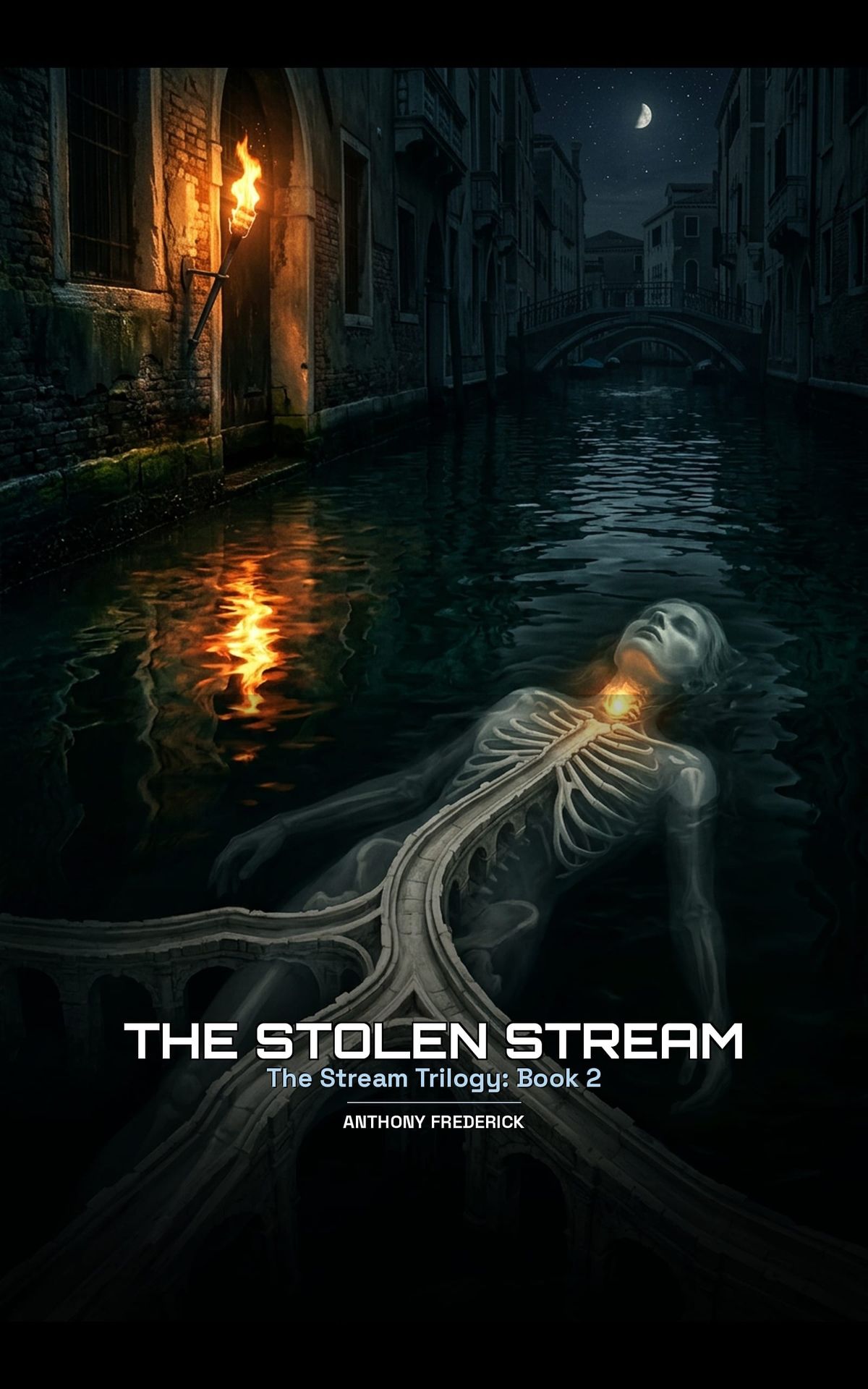
Book 2 of the The Stolen Stream trilogy
Decades after Kai Eschendorf walked upstream and did not come back, the world he tried to save kept aging without him. The conspiracy he uncovered did not end when he disappeared — it hardened. Temporal Mechanics learned his name the way a forest learns a fire: by growing carefully around the scar, by turning the burned place into something that looks like healthy ground. The ledgers were cleaned. The witnesses were rewritten. The man who was one hundred and fifteen years old and looked twenty-eight became a footnote, then a rumor, then a sealed file someone powerful would prefer the light never touched again.
Elara Venn was not there for any of it. She is a historian, a legacy researcher, the particular kind of person who reads the margins other people are paid to ignore. By the time she finds the first thread, Kai has been gone so long that the people who stole from him have grandchildren who believe the theft was always the natural order of things. That is how inherited injustice survives — not by force, and certainly not by argument, but by forgetting. By the time the victim's name becomes a curiosity in an archive, the crime has already been folded into the floorboards, sanded over, and refinished until it looks like the original wood.
Elara does not set out to be a hero. She sets out to answer a question that should have had an answer: what actually happened at the Speiche, the temporal singularity at the end of time, where the Frozen Light Singularity locked a moment of reality in infinite stasis — light frozen, time stopped, the universe caught mid-breath and never released. The official record says an accident, a tragic confluence of forces no one could have predicted. The unofficial record, the one passed in whispers between people who don't outlive their usefulness, says a choice. Kai's record, the one Elara spends years reconstructing from fragments scattered across three continents and four centuries of obfuscation, says something worse than either: it says a debt.
She inherits the Paradox of Kai. Not a book, not a clue, not a single clean answer — a paradox. The central mystery of everything that followed him: his journey to the end of time, the choice that shattered the Stream, the fact that a man who should have been claimed by the 10:1 Toll a hundred times over is somehow still a variable in an equation the powerful cannot close. The Toll is the law of the river — ten years traveled for every one year of life — and Kai broke it by simply surviving. Elara has to figure out how, and whether the breaking can be repeated by anyone else, and what it would cost a world that has learned to live on stolen time to suddenly owe it all back at once.
This is what inheritance really means in a temporal economy. Not a house on a hill. Not a name on a deed. A mystery — the unfinished, unpayable weight of someone else's stolen years, handed down because the thief was never made to return them, because the victim was never given a courtroom, because time itself was the weapon and time does not testify. Elara reads the silence Kai left behind the way other people read wills. Every gap is a withheld inheritance. Every omission is a creditor who didn't want to be found. Every redaction is a confession someone hoped would rot before anyone clever enough came along.
And the deeper she digs, the more the Frozen Light stops looking like a catastrophe and starts looking like a door. Something was sealed at the Speiche. Something was stopped on purpose, held in suspension the way a jury is held when the verdict would change everything. The stasis that holds the end of time may not be a disaster at all — it may be the only thing keeping the whole rigged economy from collapsing into a worse one, the only brake on a machine that, if released carelessly, could hurt the very people it was built to exploit. Elara has to decide what a historian owes the dead, and what she owes the living, when the truth she uncovers could either free a century of stolen time or shatter what little still flows.
She is not twenty-eight. She is not a chronothriller writer who imagined the monster and then met it face to face. She is a researcher with a stack of contradictory documents and a growing, cold certainty that the most dangerous object in any archive is the part someone took the trouble to erase. Kai left her a mystery because he could not leave her the answer — the answer was still being written when the light went still, and it has been frozen there ever since, waiting for someone patient enough, and careful enough, to thaw it without breaking it.
Think about what it costs to be the inheritor of a crime no court will name. Think about reading, night after night, the proof that your ancestor's stolen years are the reason someone else's great-grandchildren are still alive to deny it happened. Think about the particular loneliness of knowing that the only person who can confirm your worst theory is the one person who walked into the end of time and didn't walk back out.
The mystery he left is hers now. Not because she asked for it, and not because she was chosen — because time, once stolen, does not stay stolen quietly. It compounds. It accrues interest in the dark. It passes down through the generations like an unpaid debt that finally comes due, and the due date does not care whether you were the one who borrowed. Elara Venn is the due date. And the question Book Two asks is the one every inheritor of an injustice eventually has to face, usually alone, usually too late: do you bury the past and call it peace, or do you dig until your hands find the thing that was taken, and demand it back in front of everyone?
The mystery he left is hers now. The only comfort is that she is very good at reading what other people tried to make unreadable — and the people who stole a century from Kai Eschendorf were, it turns out, not nearly as careful as they believed.
The people we lose leave questions shaped like them. This is what it costs to answer one.
The The Stolen Stream Trilogy